Search this Site

Close

One of the most frequent questions clients ask is: “How do I keep my project on budget—not just at the start, but all the way through design and construction?”

While there’s no one-size-fits-all answer for every project, there are several delivery methods that offer different levels of cost predictability, transparency, and collaboration. Most people are familiar with the three traditional options, but there’s also a newer approach, called Target Value Design (TVD), to consider.

Let’s review all four methods.

Data on Charts
Data on Charts

Design-Bid-Build is a method where a client brings on an architecture/engineering/interior design firm to conduct programming and plan layouts for their current needs. Once the design drawings are completed, construction documents along with specifications are sent out to bid. The hope is that by receiving multiple competitive contractor bids, the overall cost has competition, which may reduce the overall cost. The risk of accepting the lowest bid might allow contractors to find holes or opportunities for change orders within the contract documents, increasing the cost from lowest to highest.

Design-Build is a project delivery system similar to a one-stop shop. Instead of managing separate design and construction contracts, a single entity holds one contract to provide both. This creates a streamlined process under a single point of responsibility. According to the Design-Build Institute of America (DBIA), this integrated approach fosters collaboration, saves time and money, and reduces risks by unifying the roles of designers, engineers, and contractors under one umbrella.

This method can be beneficial when the design team has established a good relationship and trust with the contractor. General contractors will bid out the construction packages that they do not self-perform, giving the owner competitive numbers on big-ticket items.

One drawback to this method is that there is no competition with other general contractors. The owner holds a contract with the general contractor, and the general contractor hires the architects and engineers.

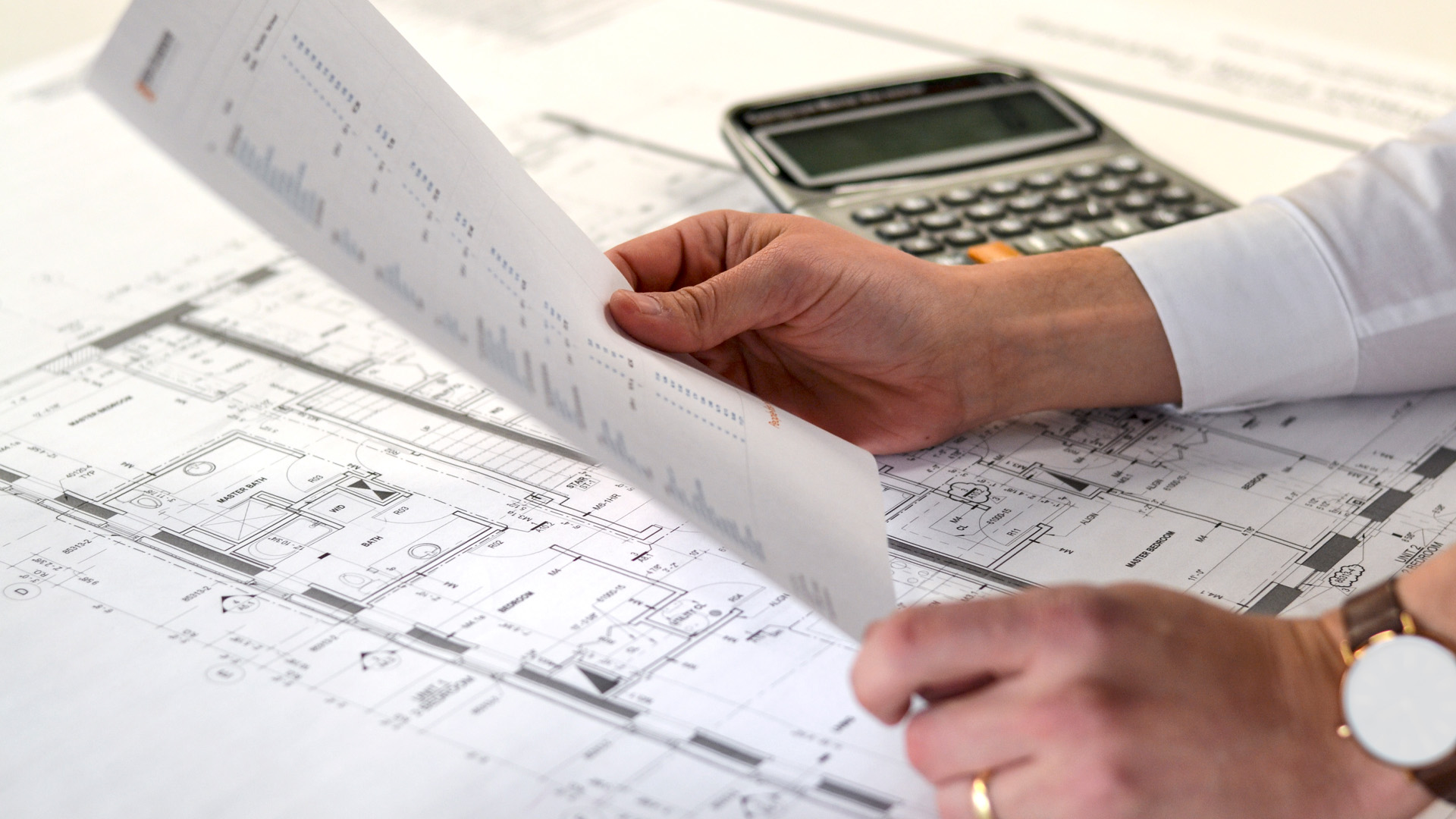
A businessman holds a construction supply list for cost estimating. Papers, documents, and a calculator sit in the background.

With Construction Manager as Constructor (CMC), the owner hires both a design team and a general contractor, who serves as the Construction Manager (CM), early on. The CM is involved during the design phase to provide constructability input and manage the project construction in parallel with the design. Payment is often structured as a Guaranteed Maximum Price (GMP) or cost-plus-a-fee.

A benefit of CMC is that the general contractor is held to a maximum cost, and the budget only changes when the owner wants to add scope. Knowing that the project is on budget, even before outside bid packages go out, prevents cost surprises.

One consideration is that general contractors typically protect themselves from ever going over the budget, often including allowances for unsure items. Owners should look out for these to make sure they understand what’s included and what’s a placeholder.

Target Value Design (TVD) is a lean construction method where a cross-functional team of architects, engineers, and interior designers, along with general contractors and sub-contractors, collaboratively set a target cost and value early in the project, then designs to meet those goals. This is done while avoiding sacrificing the owner’s vision or increasing costs through rework. Owners, designers, and general contractors, along with subcontractors, work alongside the design team, updating pricing continuously.

Each group’s team works to meet specific cost targets for their major components (e.g., structural, MEP, envelope), fostering communication and innovation.

Cost information is regularly provided to the team, allowing for proactive adjustments to keep the project within the target value. And when major cost drivers, such as mechanical, electrical and site/civil, are brought on early, the team can make decisions based on real numbers and not guesses.

With TVD, since the client pays pre-construction costs upfront, with the expectation that they will have no surprises on bid day, they will not see any competitiveness in pricing.


So, What’s the Best Delivery Method?

There isn’t a universal winner. Clients must understand each approach to help their team select the best possible method that is right for them.

Lean Six Sigma Two Teammates Collaborate on Building Layout

Want to further your understanding of budgeting and take charge of your project? Reach out to our Chief Cost Estimator, Thad Berkes.

Copyright ©2025 Design Collaborative