Search this Site

Close

When you work in the AEC industry, you are exposed to the challenges of new projects all the time.

After all, this is what we do every day for our clients. We plan, design, coordinate, and problem-solve complex projects for a living.

And yet, living through our own office renovation has been an incredible learning experience, now that we are the ones living with the disruption.

As we’ve navigated temporary relocation, logistics, technology challenges, and the human side of change, there have been countless moments where I’ve thought, “This would be really good for our clients to know.” With that in mind, here are some of the most important do’s and don’ts we’ve learned— in hopes they help other organizations avoid a few hiccups of their own.

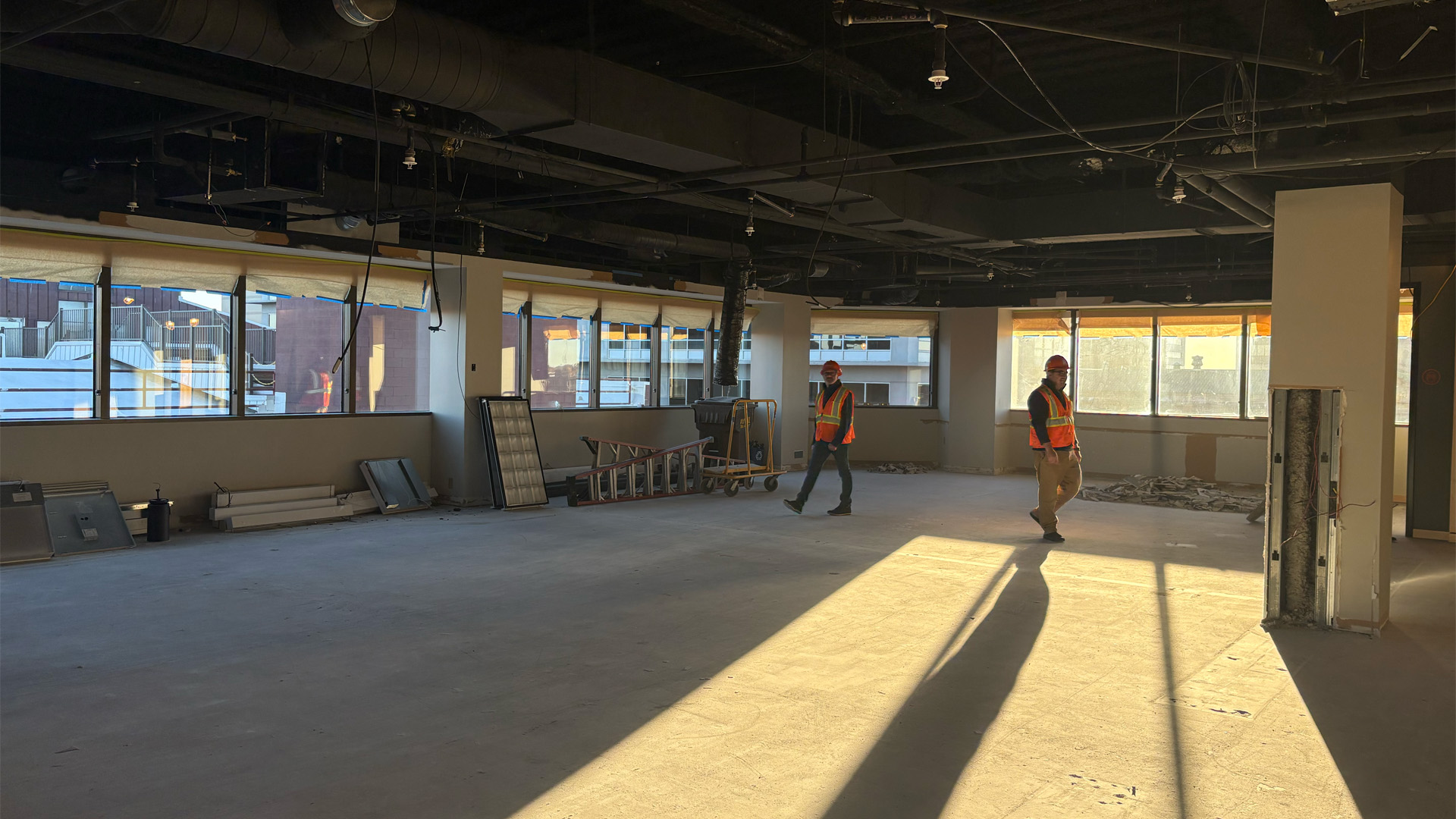
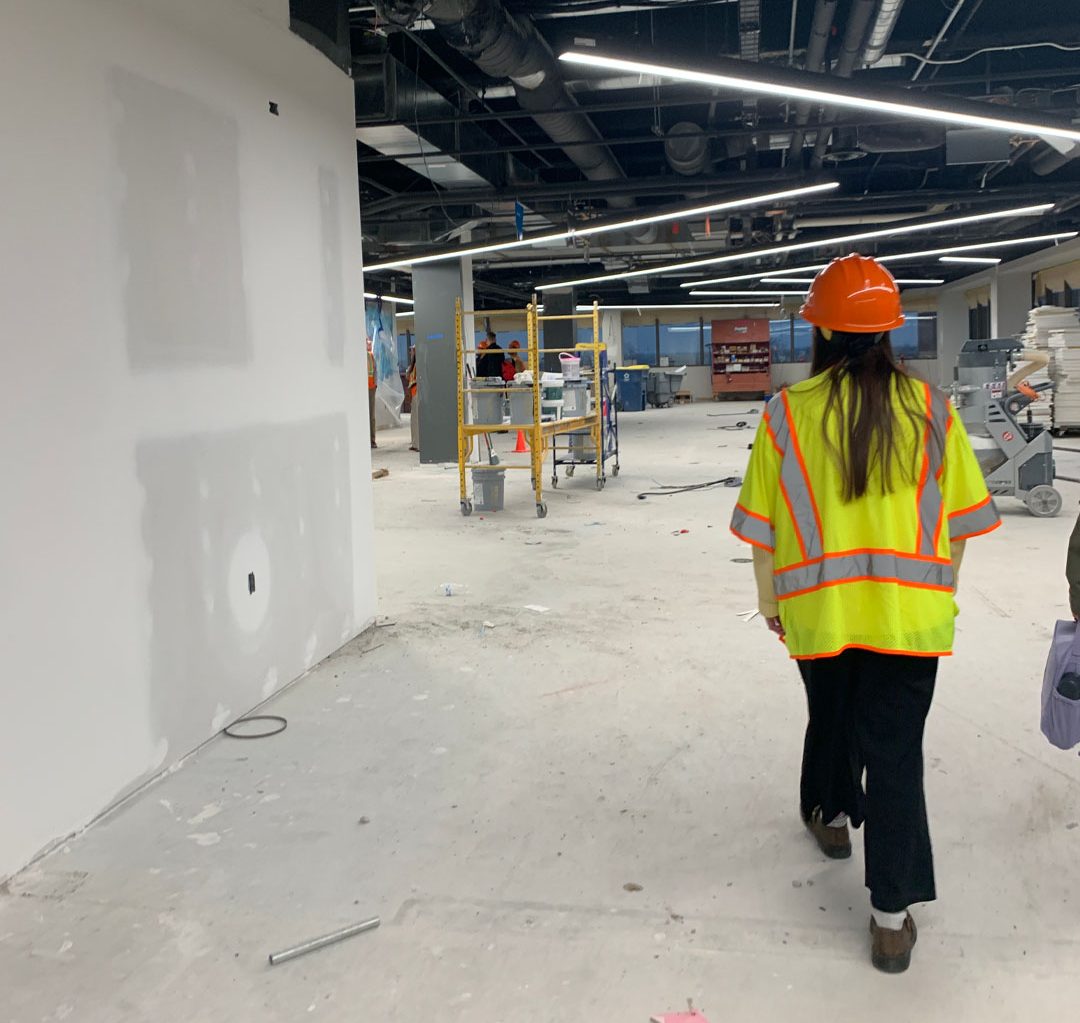
Two Design Collaborative employees walk through construction site of new office space.

DO set expectations early—especially for discomfort.

DON’T assume people will just “deal with it.”

One of the most helpful things we did early on was frame our temporary relocation with a simple metaphor: we’re going camping.

Camping isn’t perfect. It’s a little uncomfortable. You’re closer together than usual. Things don’t work quite the way they do at home. But it’s temporary—and if you go into it with the right mindset, it can actually be manageable, even fun at times.

That framing helped our team understand what to expect and reduced some of the anxiety that naturally comes with change. Whether you’re fully relocating or renovating in place, acknowledging the disruption goes a long way toward building trust.

DO underestimate nothing when it comes to moving logistics.

DON’T assume it’s “just a move.”

If there was one true “aha” moment for me, it was coming to terms with the complexity and enormity of moving logistics, especially in the case of a temporary relocation.

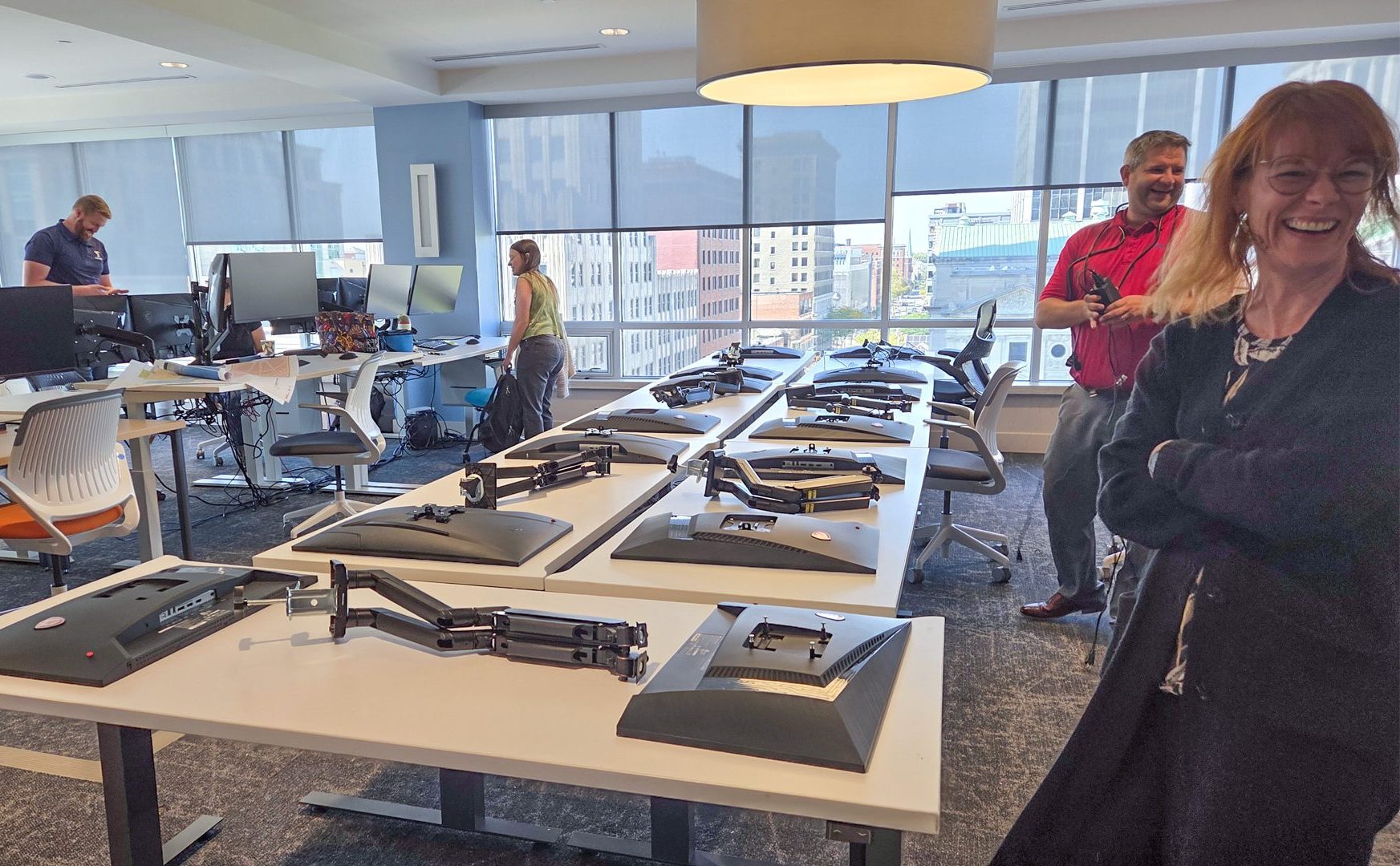
Furniture, technology, and day-to-day productivity are deeply interconnected. In our case, coordinating dual monitors, docking stations, network access, and furniture installation—all while trying to keep projects moving for our clients—was a significant effort, and one that took a lot of hands to help coordinate and execute.

Layered on top of logistics was whether to self-perform the work or hire professionals for various aspects. Handling issues internally saves cost but impacts productivity. In our case, we struck a balance between the two, asking for our staff to help with various aspects, but also relying on great partners to facilitate certain elements.

The takeaway: don’t underestimate the time, coordination, and energy a move requires. Build more buffer into your plan than you think you’ll need.

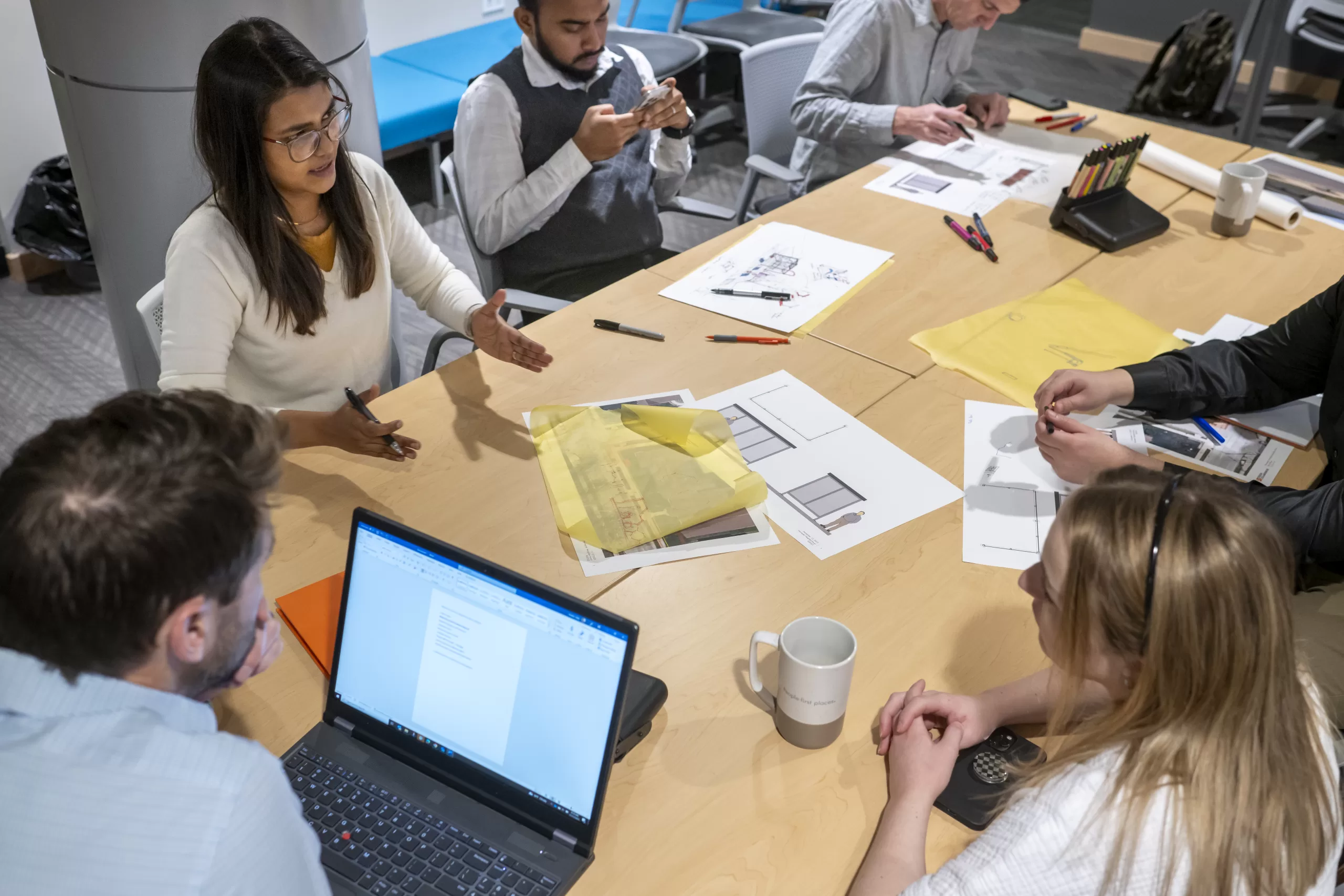
Design Collaborative employees smile at technology being set up in a temporary work space.

DO perform an honest impact analysis.

DON’T prioritize one constraint without understanding the others.

Every renovation decision affects three things: productivity, cost, and schedule. The key is recognizing that they’re all interconnected.

For us, choosing to relocate our staff off-site and completing the project in a single phase, versus phased construction in-place, took into effect all three factors of productivity, cost, and schedule. While the move itself was disruptive, we believed a few months in a stable, temporary space would be best for our teams and our clients.

That decision touched everything—cost, morale, technology planning, and even how we’ll approach the move back. Looking back, it was a decision that felt relatively small at the time but ended up having one of the biggest impacts on the project.

DO plan for productivity in temporary spaces.

DON’T assume “temporary” means “good enough.”

Temporary space still needs to function.

We spent significant time thinking through conference rooms, network access, and how teams would collaborate day to day. Even then, there were things we didn’t anticipate and had to adapt quickly once we were in the temporary space.

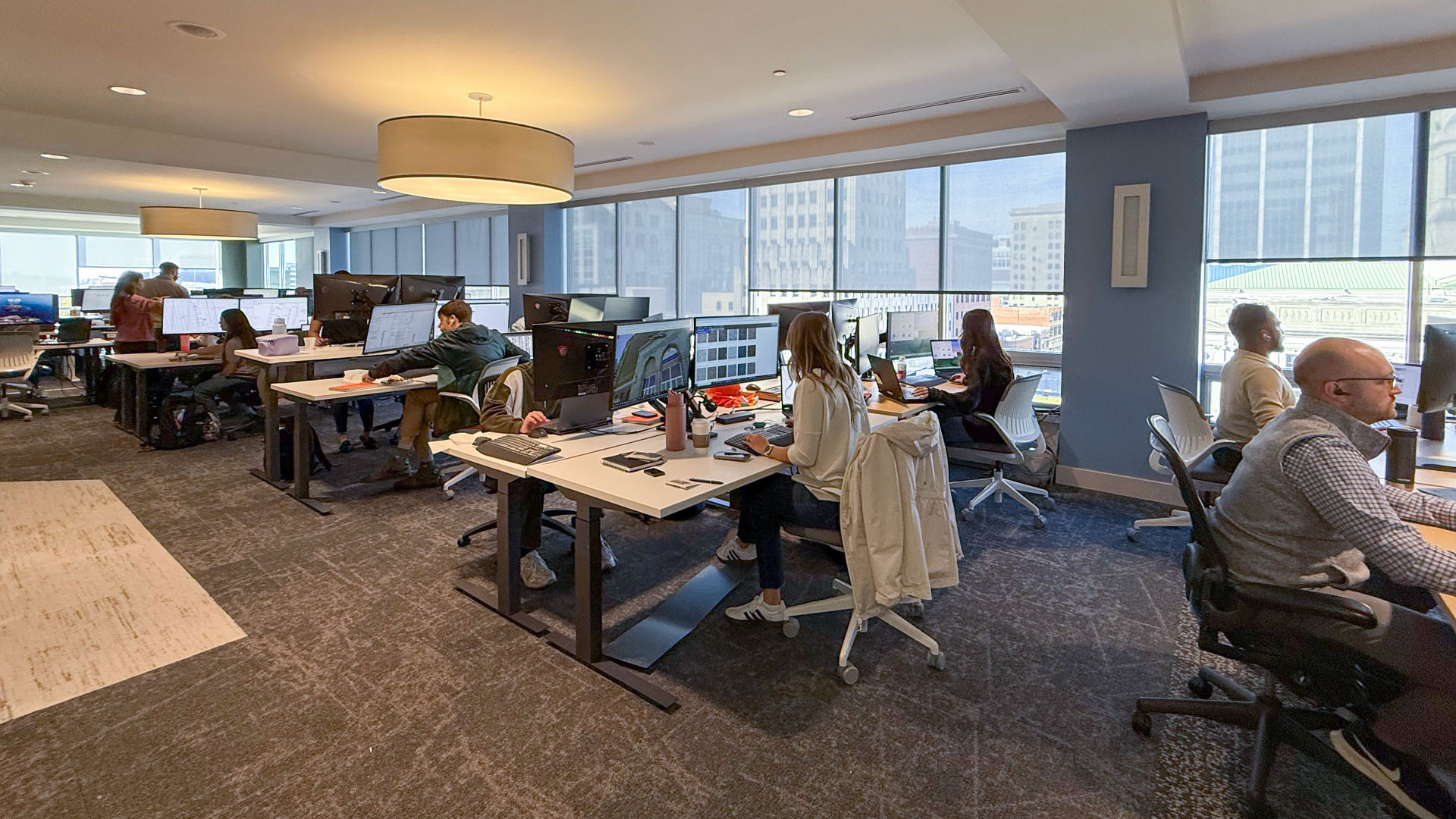
Technology, in particular, never works exactly the way you expect it to. Even with great partners and solid planning, flexibility and adaptability are essential. Plan for adjustments. They will happen.

Remote Work home office

DO be intentional about culture and morale.

DON’T overlook the human impact of disruption.

Renovations don’t impact everyone equally. Some people adapt quickly. Others feel the disruption much more deeply.

Two things matter most here: intentionality and communication.

We’ve learned that acknowledging challenges and being transparent about where things stand can significantly ease frustration. When people understand what’s happening and why, they’re far more likely to stay engaged and patient with the process.

DO create a change management plan.

DON’T wait until construction is underway to think about communication.

One of my biggest lessons learned is the importance of change management. In hindsight, I wish we had developed a formal change management plan much earlier.

Early on, our communications were more reactive and inconsistent. Even though the information was important, the lack of structure didn’t build confidence the way a steady, predictable approach does.

Once we had a structured communication strategy in place—regular updates, town halls, site visits, office hours, and multiple channels for feedback—the difference was noticeable.

Change management isn’t just a “nice to have.” There’s compelling data showing how often initiatives fail due to poor communication. If you’re planning a renovation, treat change management as a core part of the project—not an afterthought.

Two DC Employees Talking

DO plan for contingencies—and then add more.

DON’T assume your project will be the exception.

No matter how experienced you are, construction always brings surprises. I would encourage clients to right-size contingency budgets – both in terms of dollars and schedule – based on project complexity and critical milestones.

Having that cushion allows you to respond to issues without compounding stress or derailing progress.

DO be thoughtful about planning phase abilities.

DON’T rush decisions you’ll pay for later.

Being intentional about project planning and the time necessary to effectively manage the project, is an important aspect of any project. Rushing planning—or being distracted during it—almost always leads to change events down the road. Expediency is an admirable goal, but doing so can come at the sacrifice of project details not being fully thought-through or coordinated.

Our team was charged with balancing the design of our project while still contributing to incredibly important work for our clients. This is no easy task, and on top of it, we were asking our team to aid in the internal “Owner” related aspects of the job as well. Owners need time, too—not just designers—to think through furniture, technology, moving logistics, cleaning services, and landlord coordination before construction begins.

Time spent planning is rarely wasted.

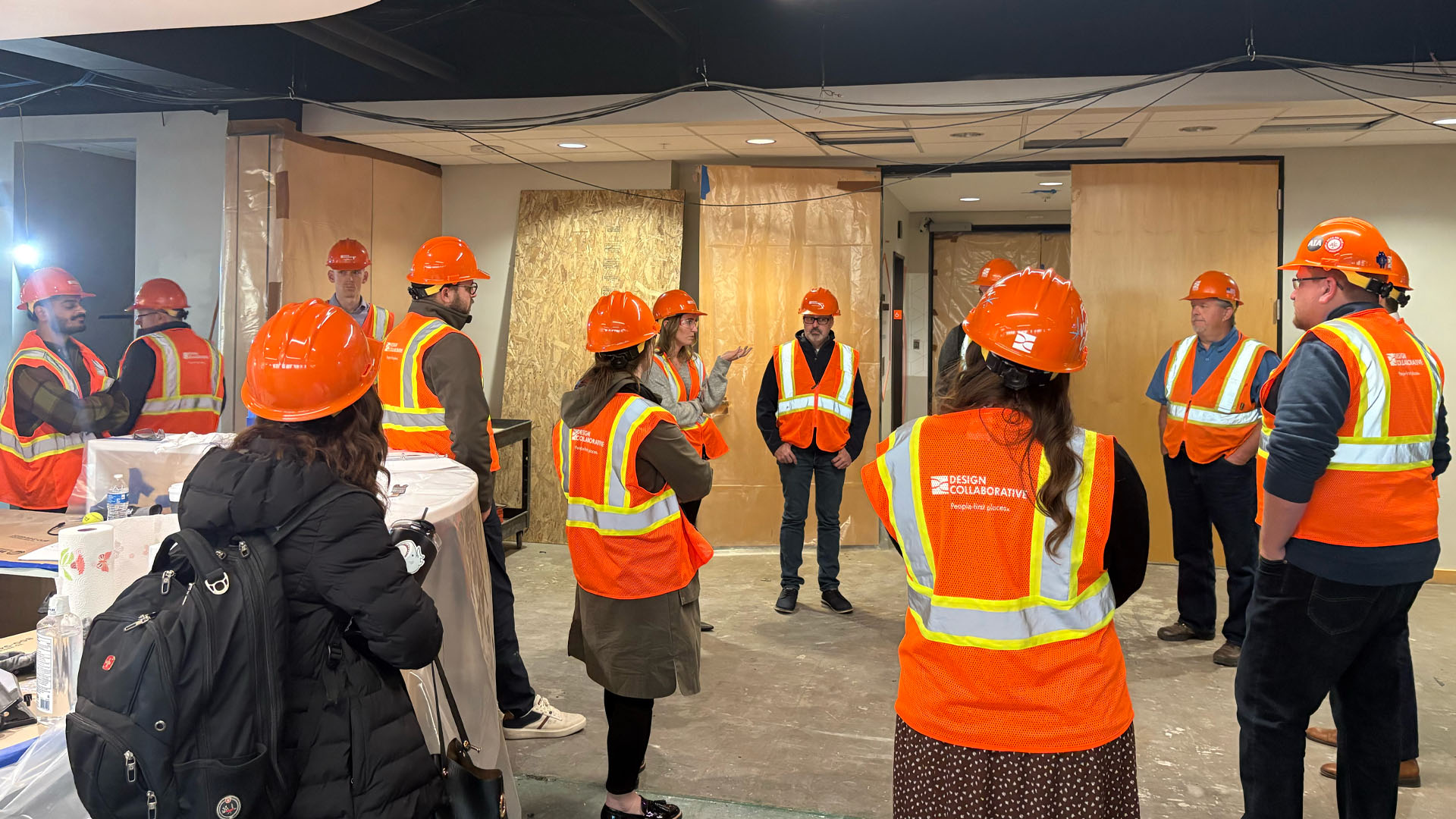
Design Collaborative employees walks through construction of the Design Collaborative Fort Wayne office renovation.

Final advice: Plan for change—even if you think you’ve planned for everything.

If you feel like you’ve thought of everything, first of all—great job. That level of preparation matters.

But even if you’ve covered 99% of what could happen, plan for that remaining 1%. Plan for change. Plan for flexibility. Plan for adaptation.

Our experience has been far more dynamic than I expected, and our ability to adjust as conditions evolved has been critical to making this process successful.

Office renovations are challenging—but they’re also opportunities. When done thoughtfully, they can strengthen culture, improve how teams work, and ultimately create spaces that better support people. The key is going into the process with eyes wide open, realistic expectations, and a willingness to learn along the way.

Considering an office renovation of your own? From early planning through change management, we’ve learned firsthand what works—and what doesn’t. If you’re thinking about what’s next for your workplace, connect with us to start the conversation.

Copyright ©2026 Design Collaborative