Search this Site

Close

Campus Design, Capital Strategy, and Partnerships: How Higher Ed Leaders Are Building for What’s Next

By Nathan Woods, AIA, NCARB

February 24, 2026

For many colleges and universities, the future of higher education isn’t being debated—it’s being built.

That idea set the tone for a recent panel discussion hosted by Design Collaborative that brought together campus leaders to talk candidly about how facilities, capital planning, and partnerships are shaping the next chapter for higher education.

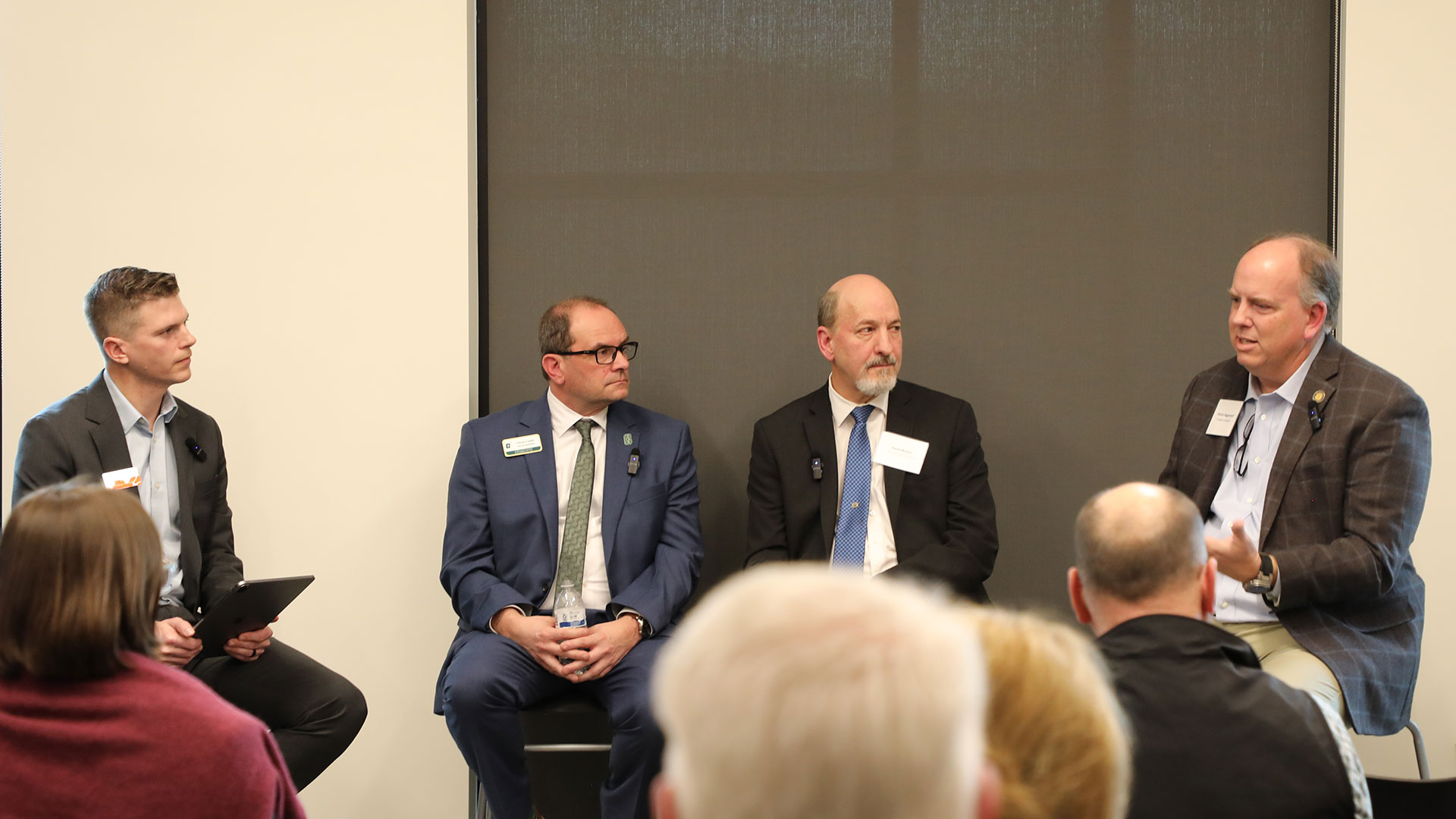
The panel featured Owen Cooks, Associate Vice Chancellor of Facilities at UNC Charlotte; Kevin Butler, CFO and Vice President for Finance and Business Affairs at Winthrop University; and Patrick Biggerstaff, Vice President for Operations at Wingate University. Representing institutions of different sizes, missions, and governance models, the three leaders may approach campus planning from different angles—but they are grappling with many of the same realities.

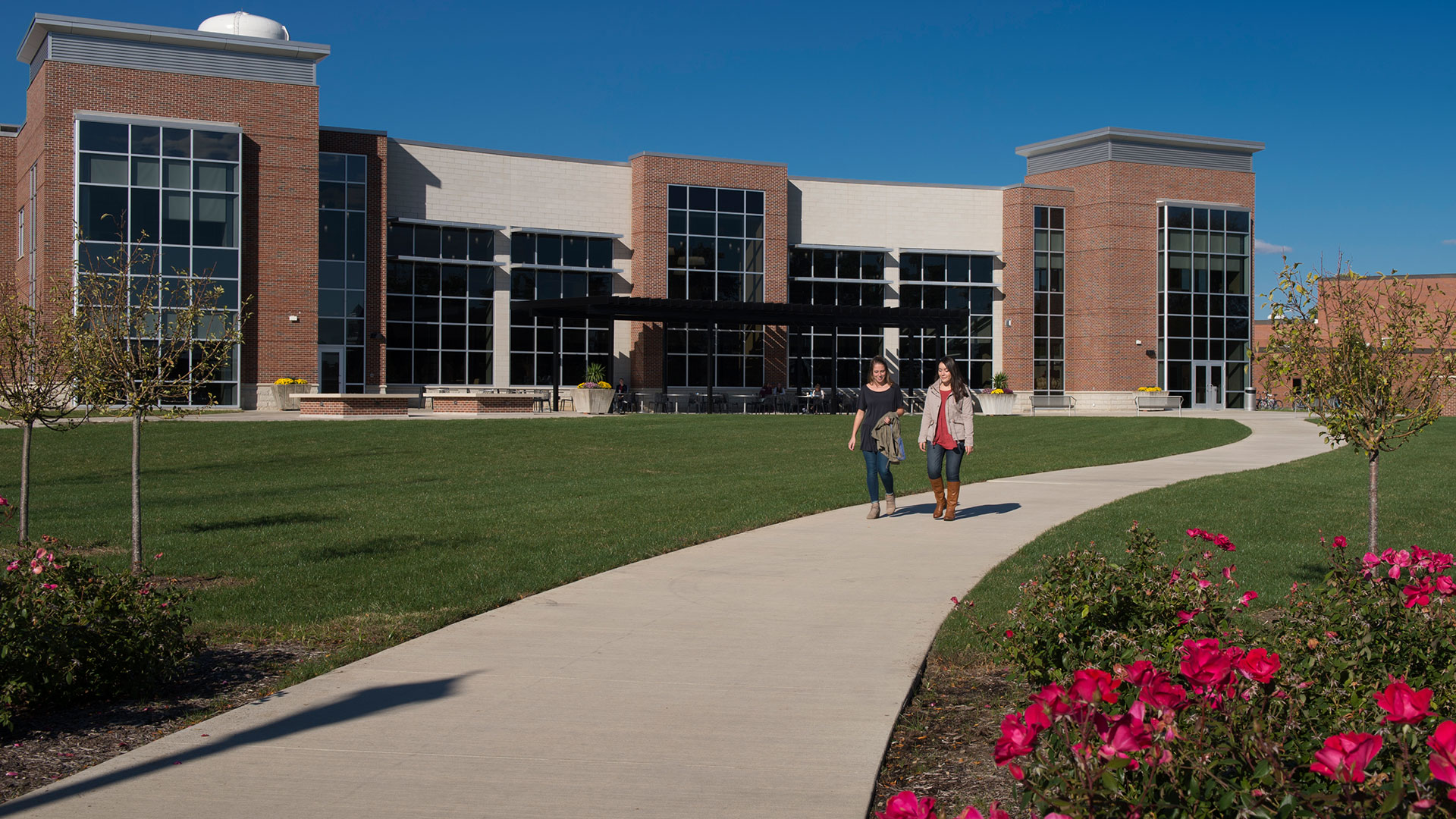
College students walking outside

A Moment of Change—Not Decline

While public conversation around higher education often leans toward concern, all three panelists agreed that the current environment is one of adjustment rather than collapse—marked by strategic decision-making rather than retreat.

Cooks pointed out that while demographic challenges are real nationally, the Carolinas tell a slightly different story due to population growth and in-migration. That continued demand, he said, brings opportunity—but also complexity—especially for a growing institution like UNC Charlotte.

Butler echoed that sense of complexity from a financial and operational standpoint. Enrollment growth at Winthrop, while positive, has introduced new pressures around housing, staffing, and capital planning. “Growth is a great problem to have,” he noted, “but it still requires careful decisions.”

From the perspective of a smaller private institution, Biggerstaff described higher education as being in the middle of a generational shift. “This is a moment that will be written about,” he said, emphasizing that institutions of all sizes are being asked to rethink how they serve students and communities.

Rethinking Space and Investment

At the center of many higher education challenges is the question of space. Deferred maintenance plays a role, but long-term suitability and alignment matter just as much.

At UNC Charlotte, Cooks explained that facilities decisions increasingly balance traditional maintenance needs with questions of suitability. “A space can be in good condition and still not work for today’s teaching or research,” he said, underscoring the importance of aligning capital investment with long-term academic vision—and with how students, faculty, and partners actually use space.

Butler described a similar challenge at Winthrop, where an older campus includes both aging buildings and underutilized real estate. Rather than focusing solely on repairs, the university is evaluating how space can be repurposed, monetized, or partnered in ways that support academic priorities, strengthen community connections, and reduce operating strain.

According to Biggerstaff, Wingate is approaching capital renewal alongside growth. Rather than treating maintenance and expansion separately, the university is intentionally coordinating improvements with new programs and partnerships—especially in health sciences—to maximize impact.

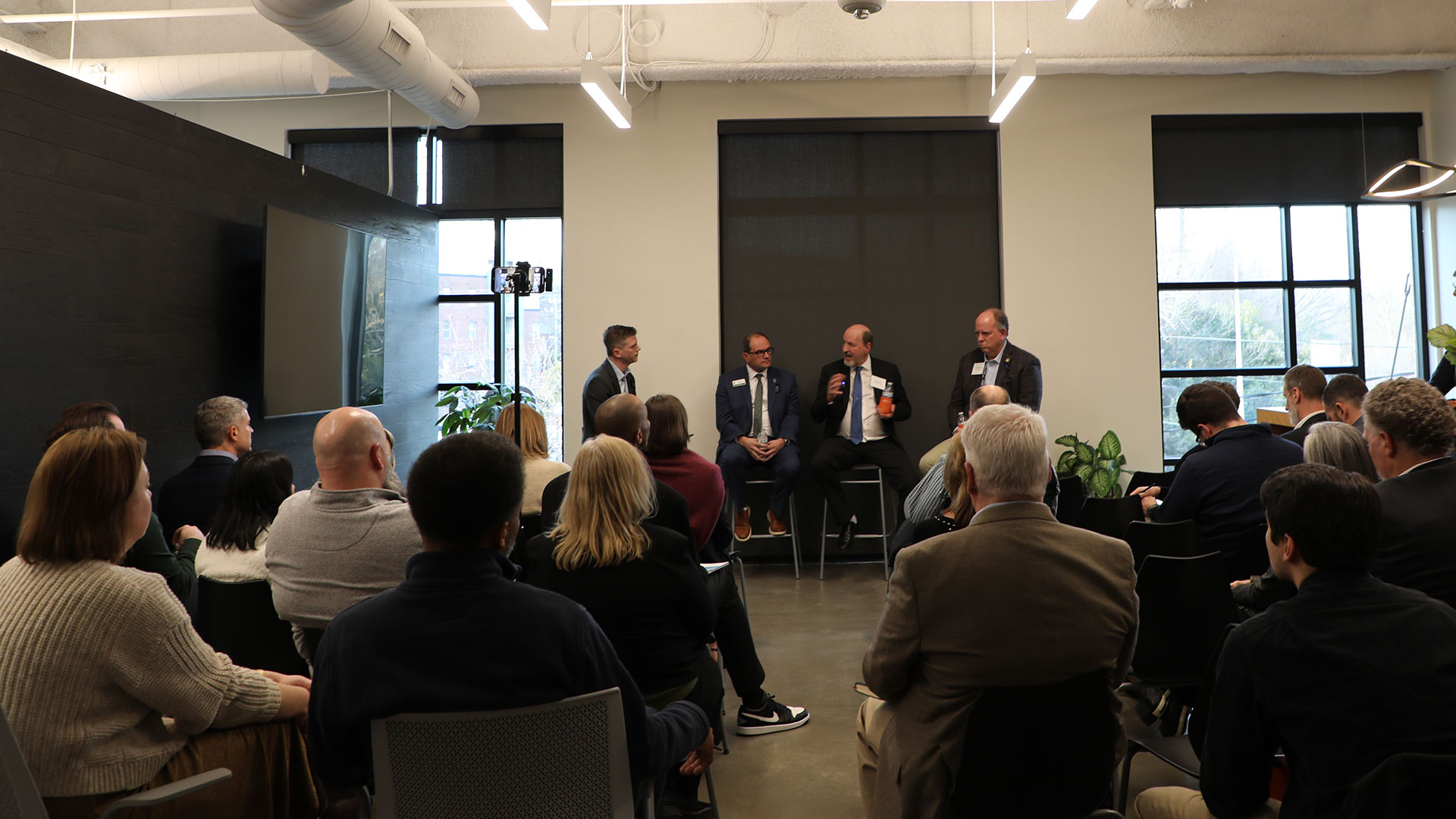
Full scale education panelists talking in front of crowd at the Design Collaborative's office in Charlotte. Full scale education panelists talking in front of crowd at the Design Collaborative's office in Charlotte.

Partnerships Shape the Campus

All three panelists agreed that partnerships are no longer optional; they increasingly shape how campuses are designed, funded, and connected to their regions.

For Biggerstaff, healthcare partnerships are central to Wingate’s mission and facilities planning. Clinical placements often serve as the starting point, but quickly evolve into deeper conversations about shared spaces, long-term investment, and workforce needs.

At Winthrop, Butler described partnerships as a way to extend limited resources. Whether through academic collaborations, real estate development, or outsourced services, the goal is to focus internal capacity where it matters most—on students and academic quality.

Cooks shared how UNC Charlotte’s partnerships are shaping research and innovation spaces. Buildings like the PORTAL facility, which houses private companies alongside university programs, reflect a broader shift toward campuses that support entrepreneurship, applied research, and regional economic development by co-locating academic programs, industry partners, and talent pipelines.

Looking Ahead

All three leaders remained optimistic about the future of higher education in the years ahead.

Biggerstaff expressed hope that higher education is moving away from an amenities-driven mindset and back toward purpose, which means meeting students where they are and preparing them for meaningful careers.

Cooks talked about rebuilding public confidence through visible outcomes. From applied research to workforce partnerships, he sees campuses telling their value story “one project and one graduate at a time.”

Butler emphasized focus as a strategic imperative. “Institutions need to be clear about what they’re excellent at,” he said. “Otherwise, resources get spread too thin.”

Despite the challenges, Biggerstaff, Cooks, and Butler remained forward-looking. While higher education is navigating real disruption, they made clear that institutions willing to adapt, collaborate, and stay aligned with their mission are well-positioned for what comes next.

The path forward for higher education won’t be defined by a single trend or solution, but by leadership that plans, invests, and partners strategically —often expressed most visibly through physical space and capital decisions. Across institutions of every size, those choices are already influencing how campuses evolve and how effectively they serve the students who rely on them.

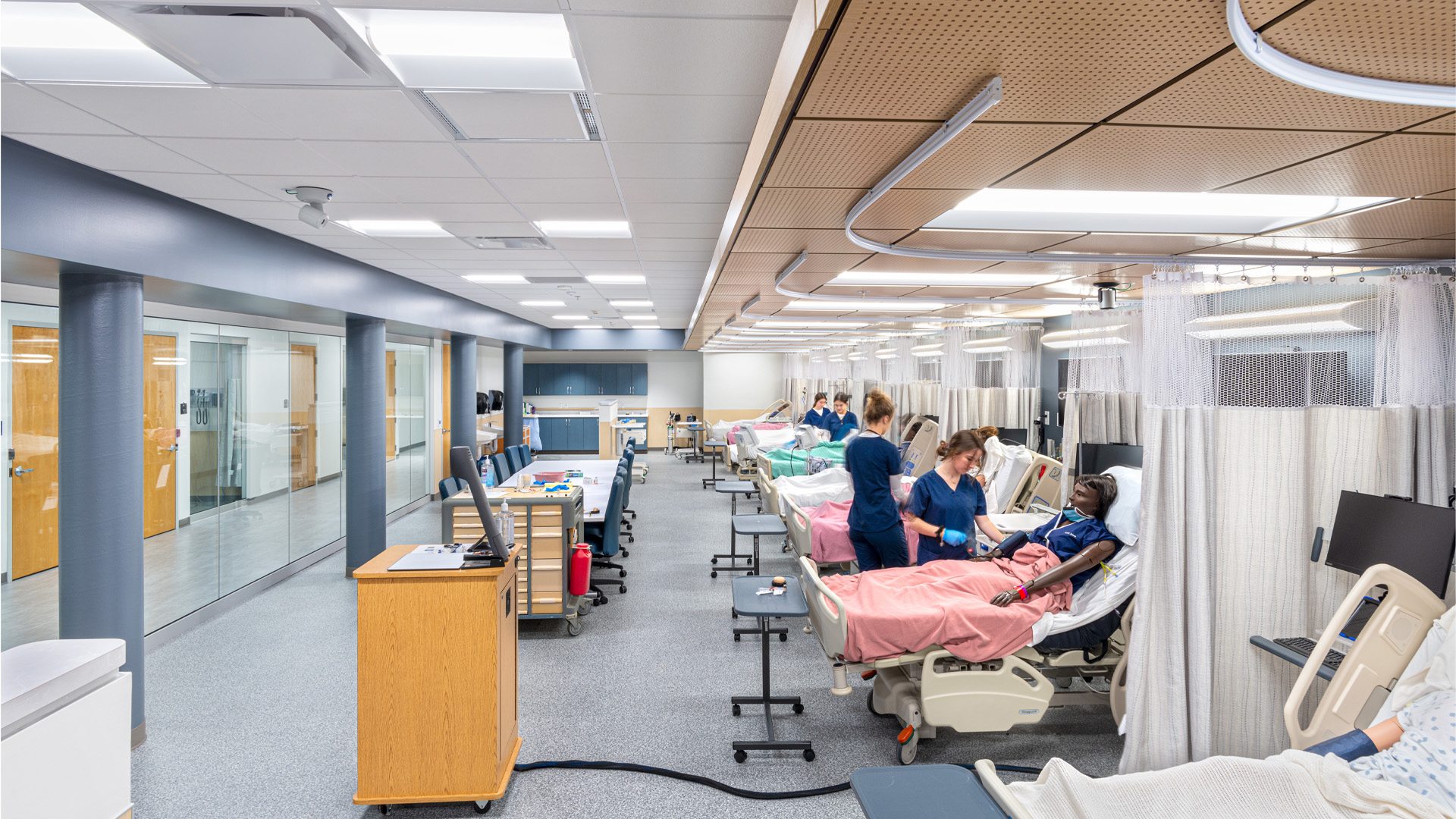
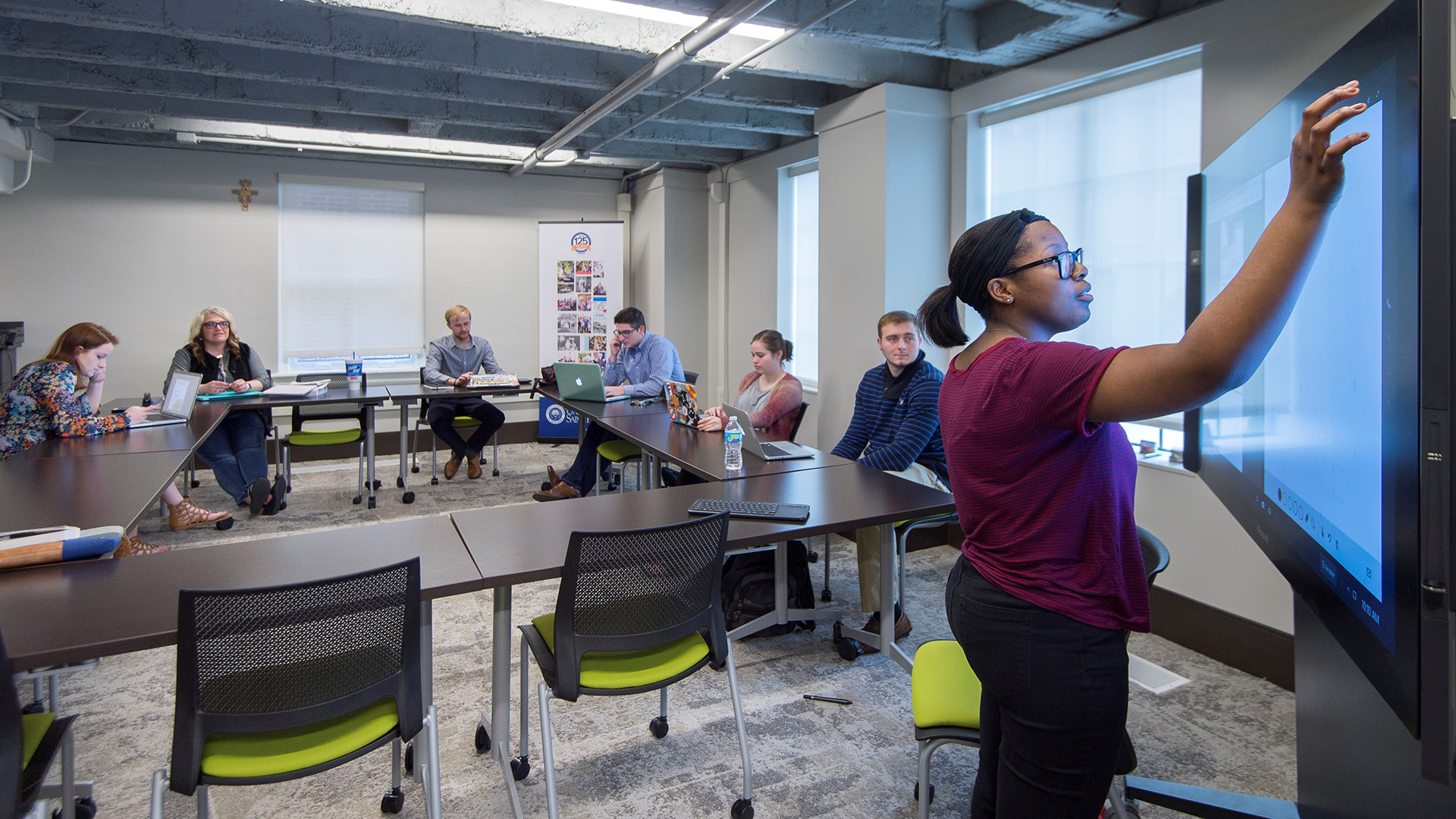
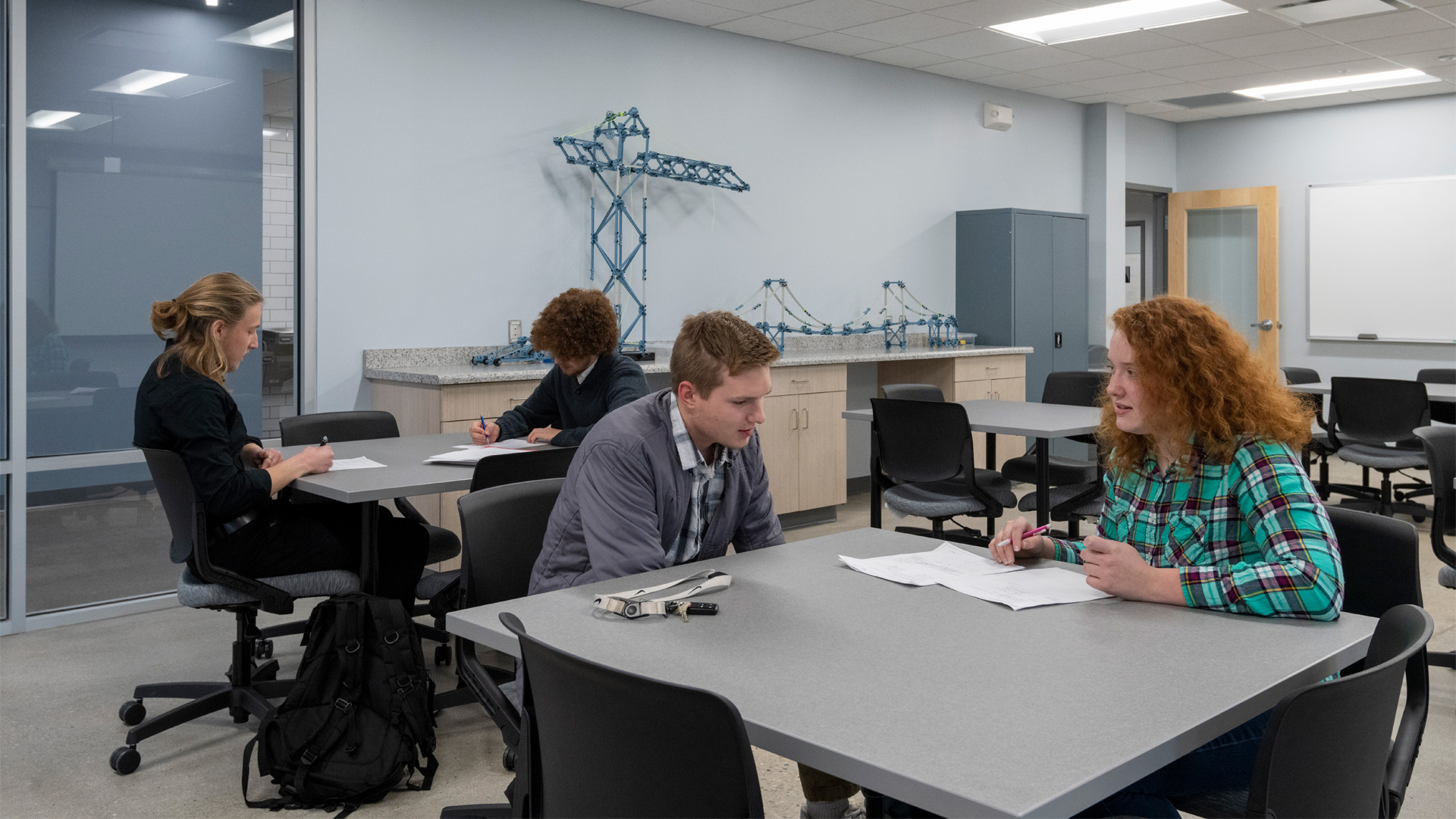
University of Saint Francis School of Business classroom Students collaborate in a classroom at Indiana Wesleyan University Hall of Engineering.

As higher education leaders rethink space, partnerships, and capital investment, the campuses that thrive will be those guided by clear strategy and the right collaborators. If your institution is navigating growth, reinvestment, or partnership-driven development, connect with Design Collaborative to explore how thoughtful campus design, capital strategy, and partnership planning can support your goals—today and tomorrow.

Article published in the Charlotte Business Journal.

Copyright ©2026 Design Collaborative