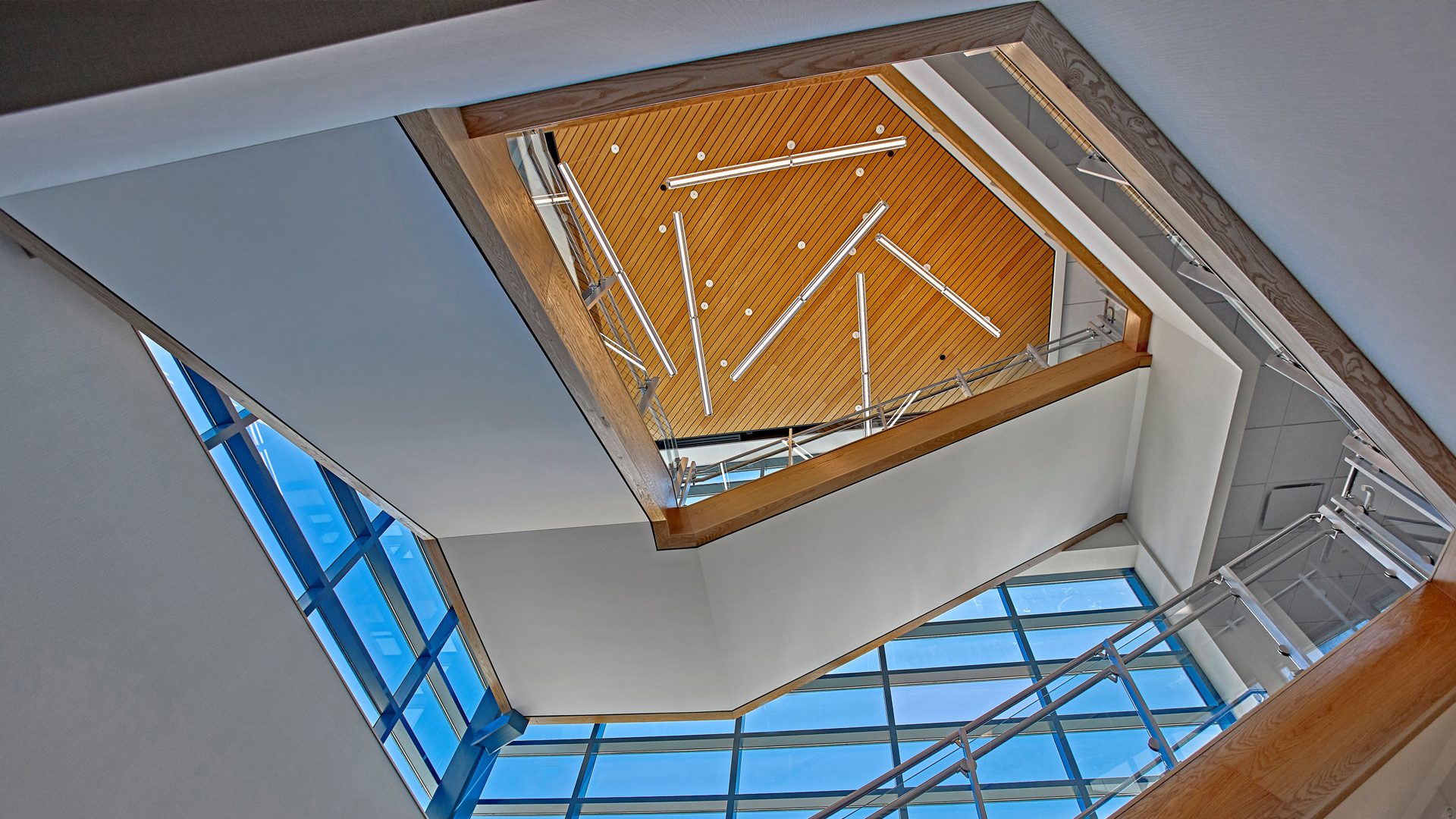
5 Signs of Healthy and Comfortable Building Lighting
By Kelsey Rowe, PE, CLD
February 24, 2026Post Tagged in
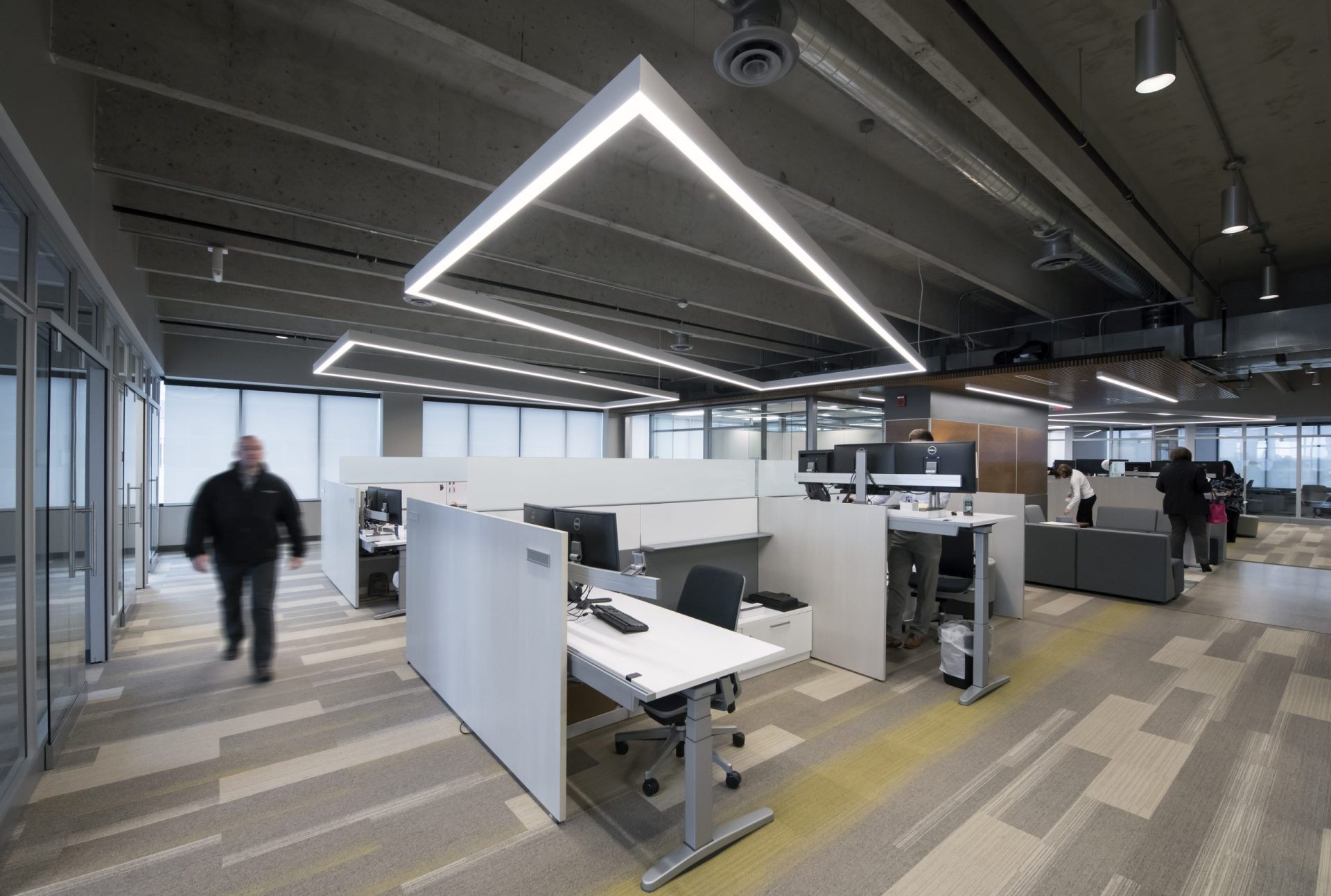
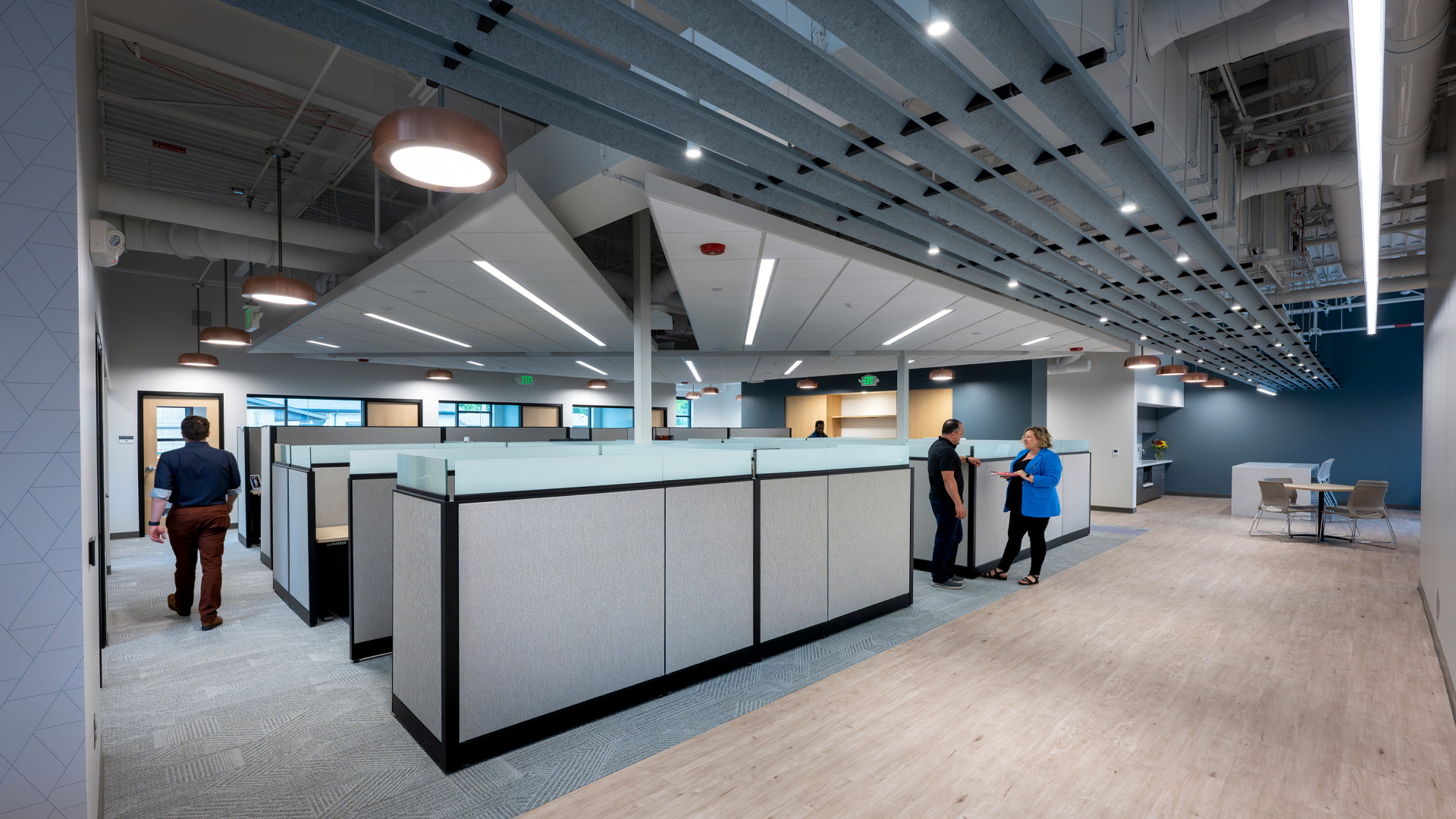
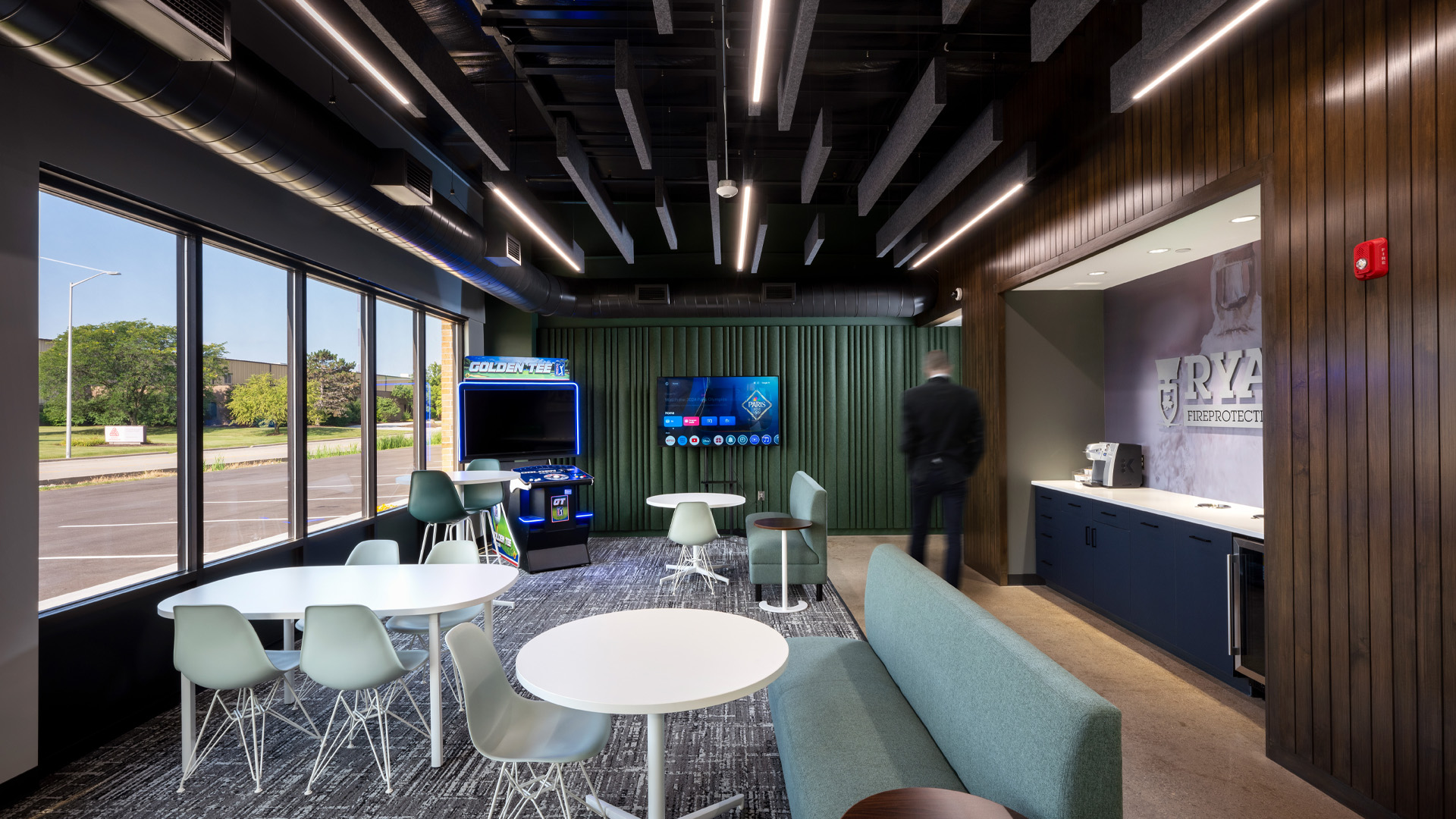
When we talk about healthy buildings, one of the most influential components is lighting. Lighting affects visual comfort, circadian health, mood, and energy usage.The great thing is: you don’t need to be a lighting designer to spot the basics. There are five simple cues—rooted in lighting science, the Illuminating Engineering Society (IES), and the WELL Building Standard—that anyone can evaluate in minutes. These cues signal whether a building is positioned for high-performing, comfortable environments or whether hidden costs and complaints may be waiting after move-in. Let’s walk through five signs to look for. |
|
 |
Daylight Access + Daylight ControlDaylight is a major contributor to circadian health and overall alertness. It’s also something people notice the second they walk into a building. Look for:
Here’s a simple gut check: if you’re turning on all the lights at noon because the daylight feels harsh or uneven, something in the daylight design isn’t working. Good daylighting isn’t about flooding a space with sun — it’s about creating balanced, usable light. |