Search this Site

Close

Many organizations are facing the same challenge: buildings that underperform, spaces that struggle to attract users, and developments that stall before reaching their full potential.

These challenges are no longer solved by aesthetics alone. Today, placemaking is not a luxury or a buzzword. It’s an expectation, driven by how well a space performs for the people who use it and the business outcomes it supports.

As a result, the architectural landscape has shifted. Technical expertise and creative design remain essential, but successful projects increasingly hinge on something less visible and far more impactful: strong relationships built on alignment, understanding, and trust.

Constituency
Constituency

Relationships: The Cornerstone of Meaningful Design

Modern architecture is no longer a solitary creative act. It’s a collaborative process that works best when alignment happens early—before drawings are produced or solutions are prescribed. At Design Collaborative (DC), this starts with building a shared understanding of project objectives, operational realities, and end-user needs before any design ideas are pitched.

This early alignment supports the integrated partner approach known as Target Value Design, where designers, contractors, and key stakeholders engage from the outset of projects. This manifests in three impactful byproducts for clients:

  • Fewer Surprises, Faster Decisions: Early coordination helps identify constraints and opportunities sooner, reducing late-stage changes that drive up costs and delay schedules.
  • Better Execution: Strong working relationships across the project team ensure that design intent is carried through construction accurately, protecting both budget and timeline.
  • Stronger Long-Term Partnerships: When projects run smoothly and deliver predictable outcomes, clients spend less time managing issues and more time advancing their core business.

Understanding Needs: Beyond Aesthetics to Outcomes

One of the most common challenges in project development is a misalignment of priorities. Architects and clients must work together to balance design expression, efficiency, financial performance, user satisfaction, and long-term flexibility. This requires moving beyond surface-level symptoms—such as underutilized space or declining engagement—to uncover root causes and measurable goals.

At DC, we address this through our Fingerprint process, which guides teams through the entire project delivery cycle from initial assessment through post-occupancy evaluation. Rather than treating discovery as a single meeting, the Fingerprint process embeds strategic listening and collaboration throughout every phase of a project.

Utilizing a step-by-step process like this means:

  • Design decisions are tied directly to stated goals—whether that’s improving employee engagement, increasing lease velocity, or supporting future growth.
  • Stakeholder input is captured early, reducing rework and internal friction.
  • Success can be evaluated after occupancy, creating a feedback loop that informs future investments.
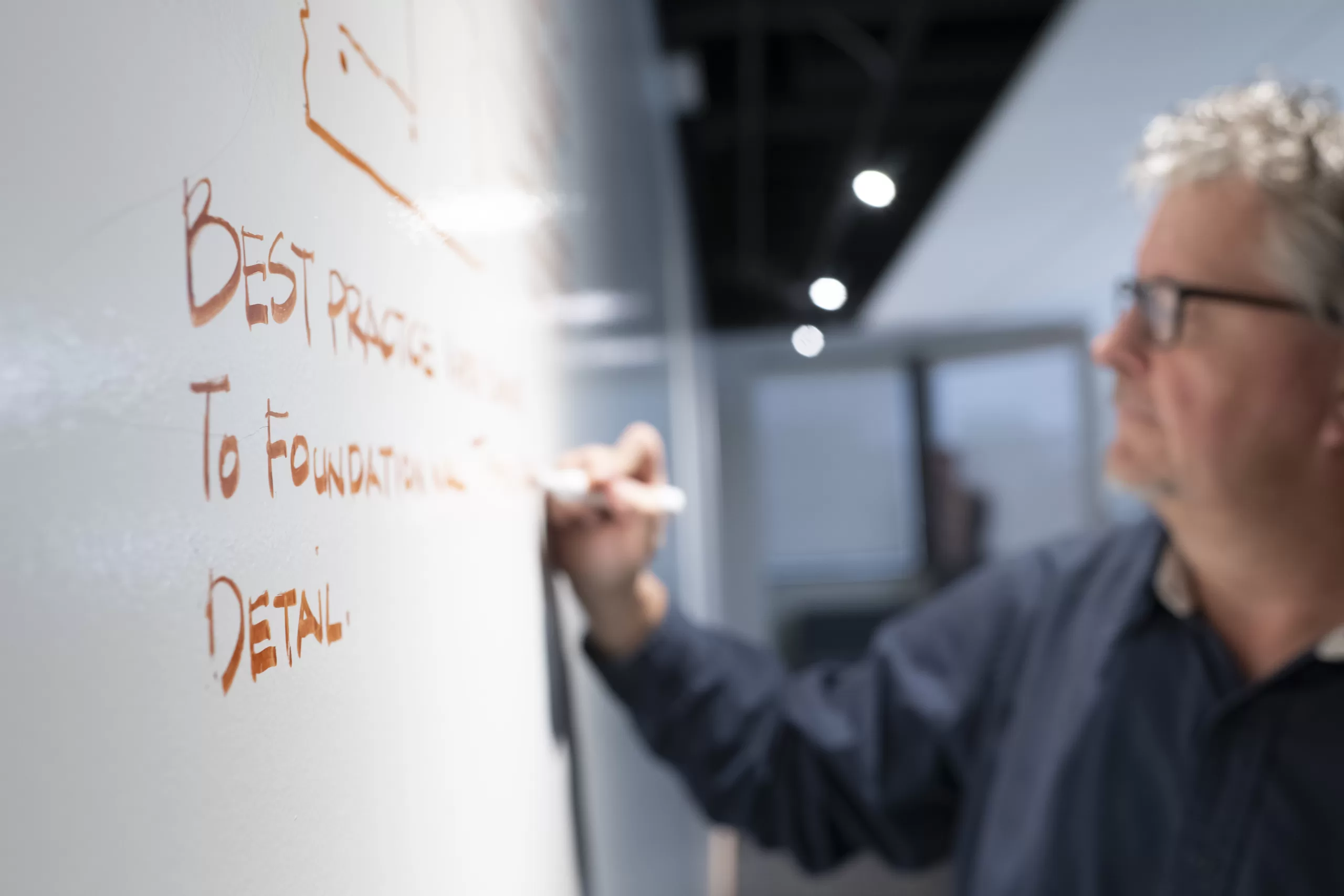
Indiana Michigan Power Center - Corporate Headquarters Planning Session with Whiteboard

Trust: The Foundation for Innovation

Trust is what allows projects to move beyond baseline solutions. It’s built through transparency, consistent performance, and honest dialogue—especially when challenges arise. In trusted client–architect relationships:

  • Innovation Becomes Safer: Clients are more open to creative solutions when they understand the rationale, risks, and return on investment behind them.
  • Risk Is Actively Managed: Transparent communication around costs, schedules, and trade-offs helps clients make informed decisions and protects their investment.
  • Iteration Leads to Better Results: Early ideas are tested, refined, or discarded without friction—viewed as progress rather than setbacks.

Why This Matters

As projects become more complex and stakeholder expectations increase, clients need partners who can navigate collaboration, communication, and trust as skillfully as design.

Winston Churchill famously noted, “We shape our buildings; thereafter they shape us.” The process used to shape those buildings matters just as much. When relationships are prioritized from the start, the result is not just a finished building, but an environment built for stronger teams, healthier organizations, and more resilient communities.

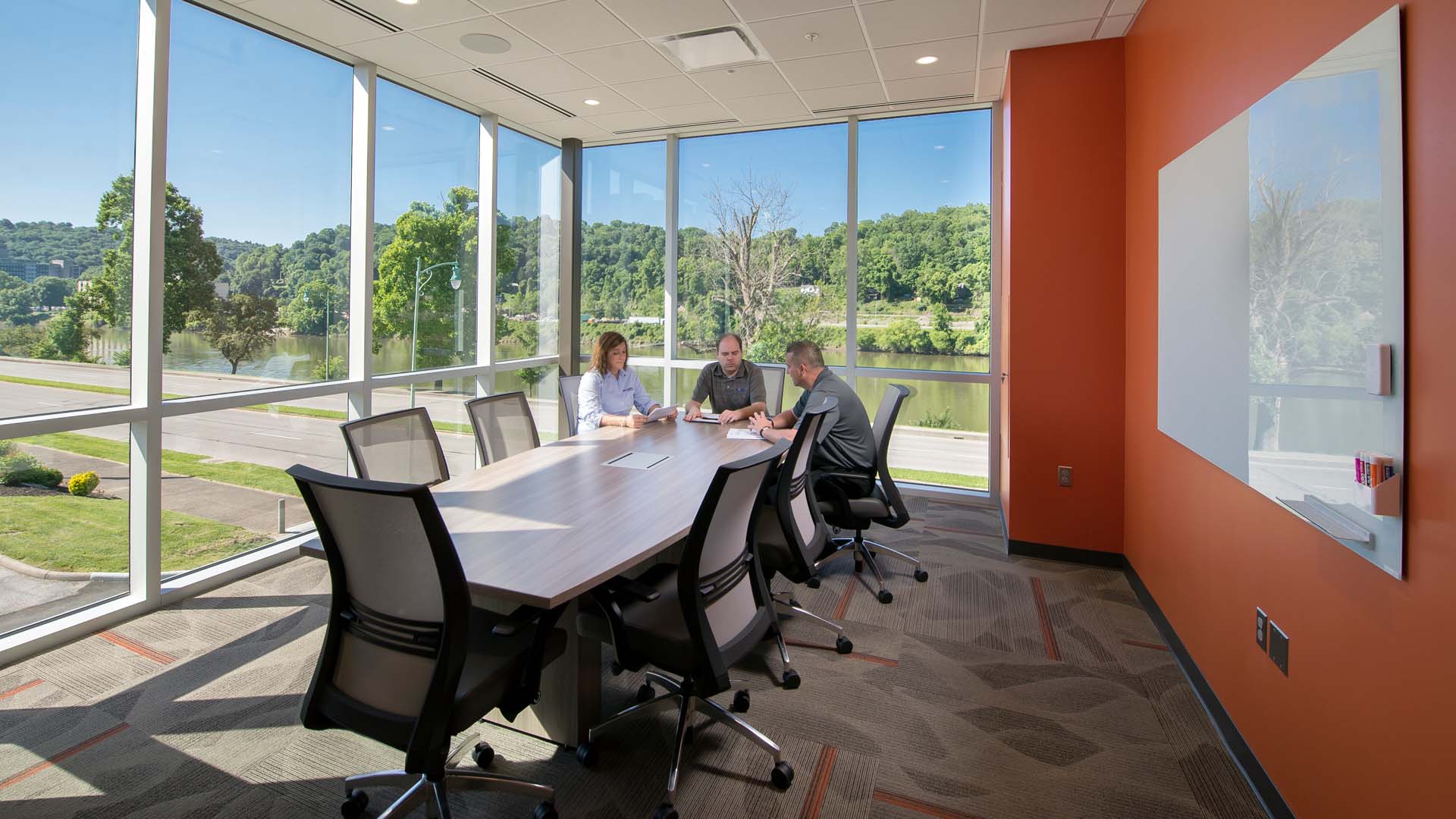
PioneerWV Federal Credit Union Headquarters Conference Room

Ready to put relationship-driven, performance-focused design into practice? We partner with organizations to align strategy, stakeholders, and design from day one—so spaces perform as intended and investments deliver measurable value. If you have an upcoming project, reach out to our team to explore what success could look like for you.

Copyright ©2026 Design Collaborative