Contractors continue to actively bid projects throughout the summer as they work to secure backlog for the remainder of the year.

The current bid market appears strong, with multiple bidders participating across opportunities. I anticipate this competitive bidding environment will continue through the summer before beginning to soften in the fall.

With the continued growth of large-scale projects, such as data centers, demand for electricians remains exceptionally strong. However, the long-term sustainability of this demand remains an important consideration.

Tariff-related costs have not caused the level of disruption initially anticipated. While they continue to have a modest impact on overall costs, lead times appear to remain relatively stable.

Man works on construction site at dusk.

Executive Planning Takeaway

Commercial construction demand is expected to remain resilient through 2026, supported by continued market activity and sustained project pipelines. However, successful delivery will require proactive management of ongoing cost escalation, labor availability, tariff exposure, and supply chain risk. Teams should maintain disciplined controls throughout budgeting, design, and preconstruction, with focused attention on escalation assumptions, labor market conditions, material volatility, and appropriate contingency allowances. While the demand outlook remains favorable, executive planning should account for continued delivery pressures and prioritize cost certainty, schedule reliability, and risk mitigation.

Construction Employment

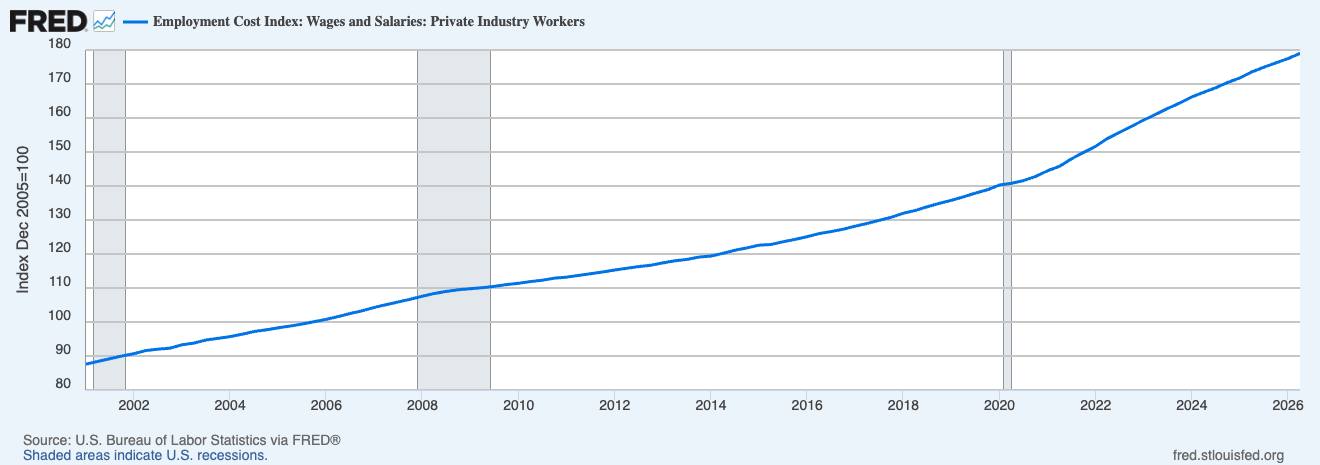
Wages and salaries have increased significantly in recent periods, a trend reflected in FRED data across key blue-collar industries.

Section Summary

ABC (Associated Builders and Contractors) stated that Department of Labor data highlights that the apprenticeship data reinforces a broader labor-market challenge for the construction industry: while demand remains strong, the availability of skilled labor continues to be a key constraint. Growth in merit shop and nonunion apprenticeship programs indicates that alternative workforce development models are playing an increasingly important role in expanding labor capacity. For planning purposes, this trend supports continued investment in training pipelines, flexible apprenticeship structures, and workforce strategies that can help mitigate long-term labor shortages and support project delivery reliability.

Escalation Construction Worker

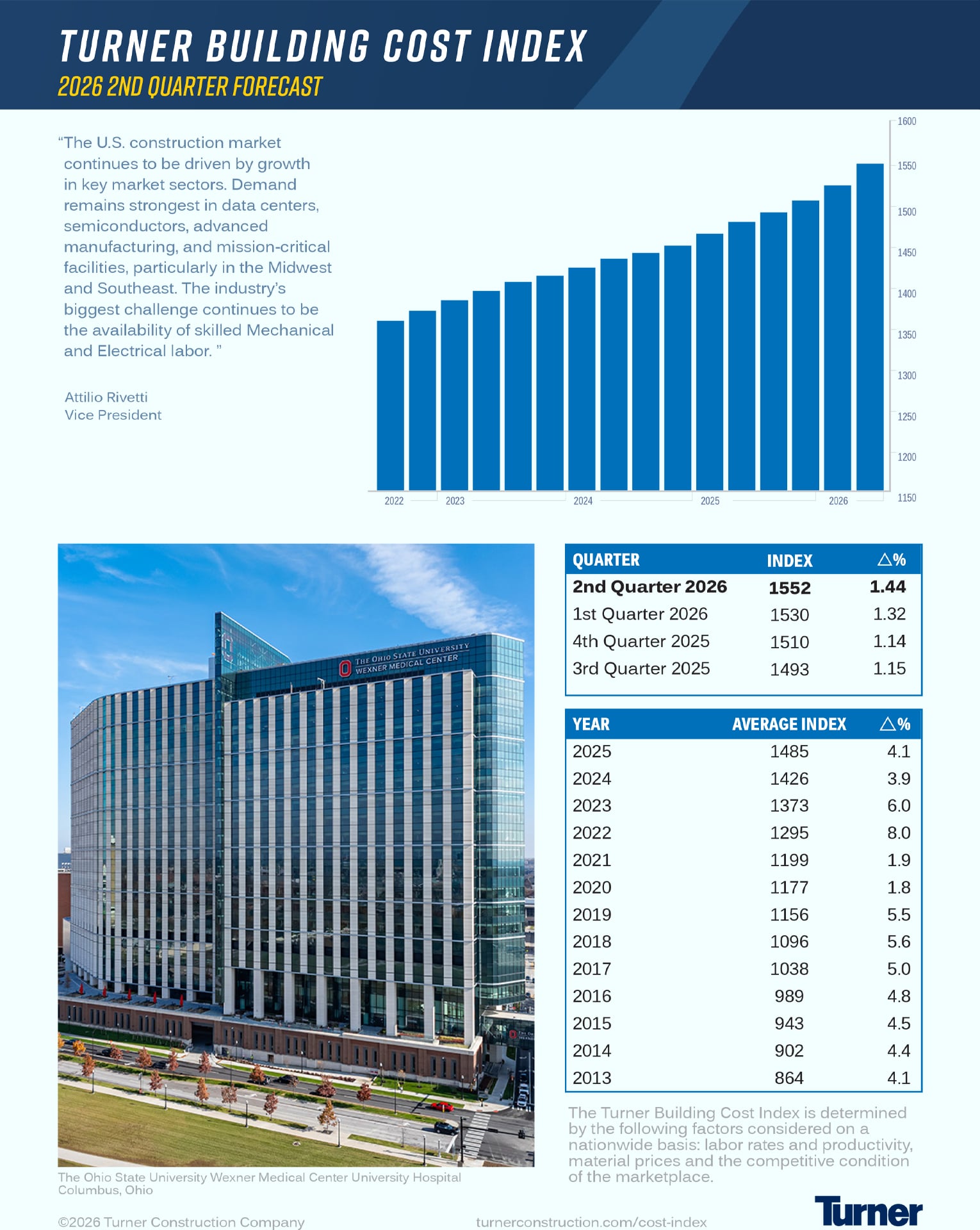
Turner Cost Index

The Turner Cost Index remains a valuable resource for timely, market-relevant construction cost data. Attilio Rivetti’s insights continue to be widely referenced for understanding current cost trends and market conditions, providing a useful benchmark for evaluating escalation, pricing movement, and broader construction market impacts.

Cost pressures are expected to remain elevated through 2026, though the pace of increase appears more moderate than previously anticipated

Construction material costs are projected to remain elevated throughout 2026, with nonresidential building inflation expected to reach 4.4% when tariff-related impacts are included.

Energy market volatility continues to influence construction costs, particularly through transportation and diesel-related expenses. As of August, Brent crude was trading at approximately $89.31 per barrel. At this point, the Iran conflict does not appear to have materially affected energy pricing.

Broader inflationary pressures and persistently high interest rates continue to affect commercial construction activity, contributing to slower growth expectations and ongoing market volatility.

With cost, labor, and market conditions continuing to evolve, early planning matters. If you’re considering a project or planning your next capital investment, connect with our team to explore what’s possible.

Copyright ©2026 Design Collaborative