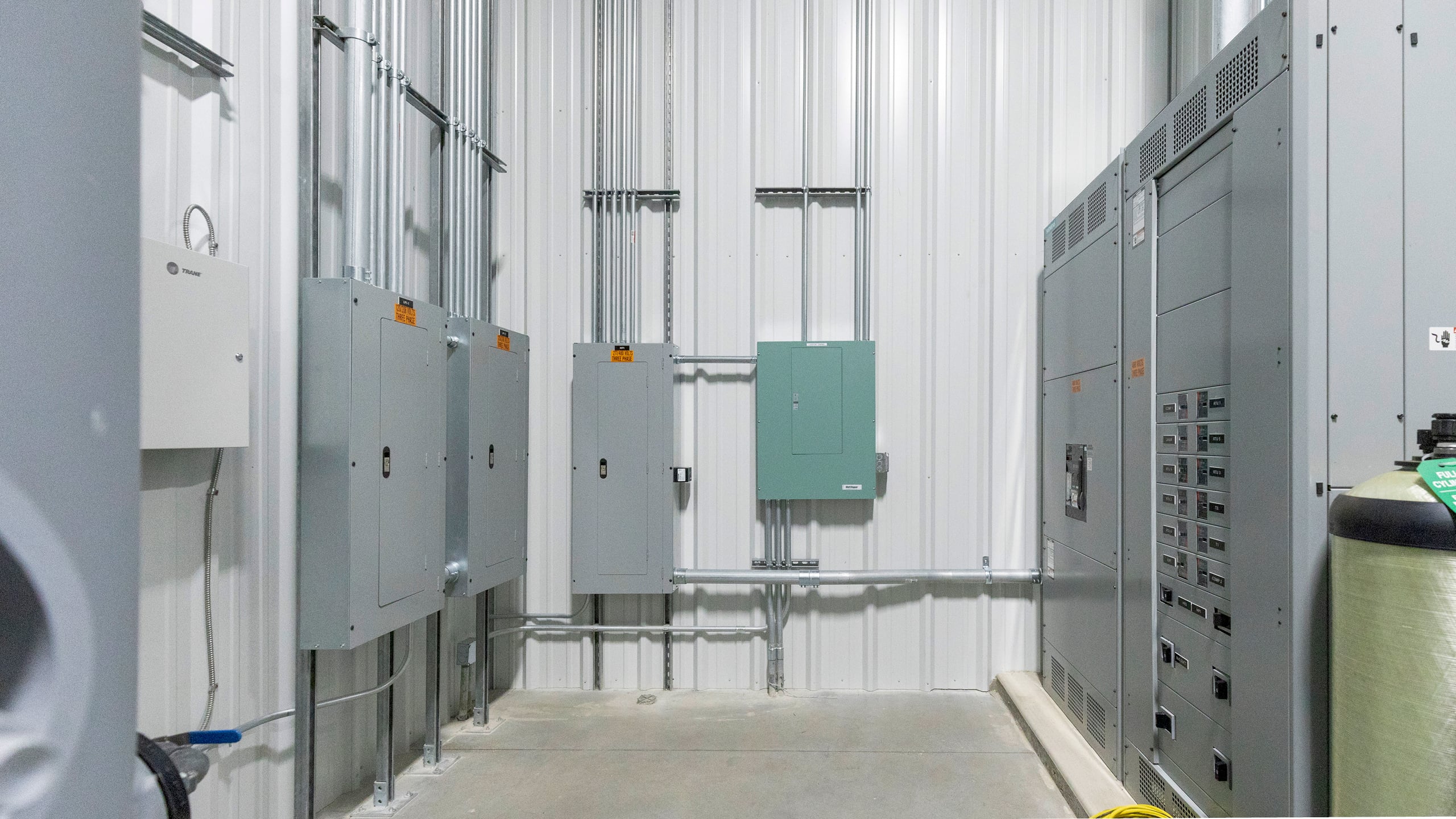
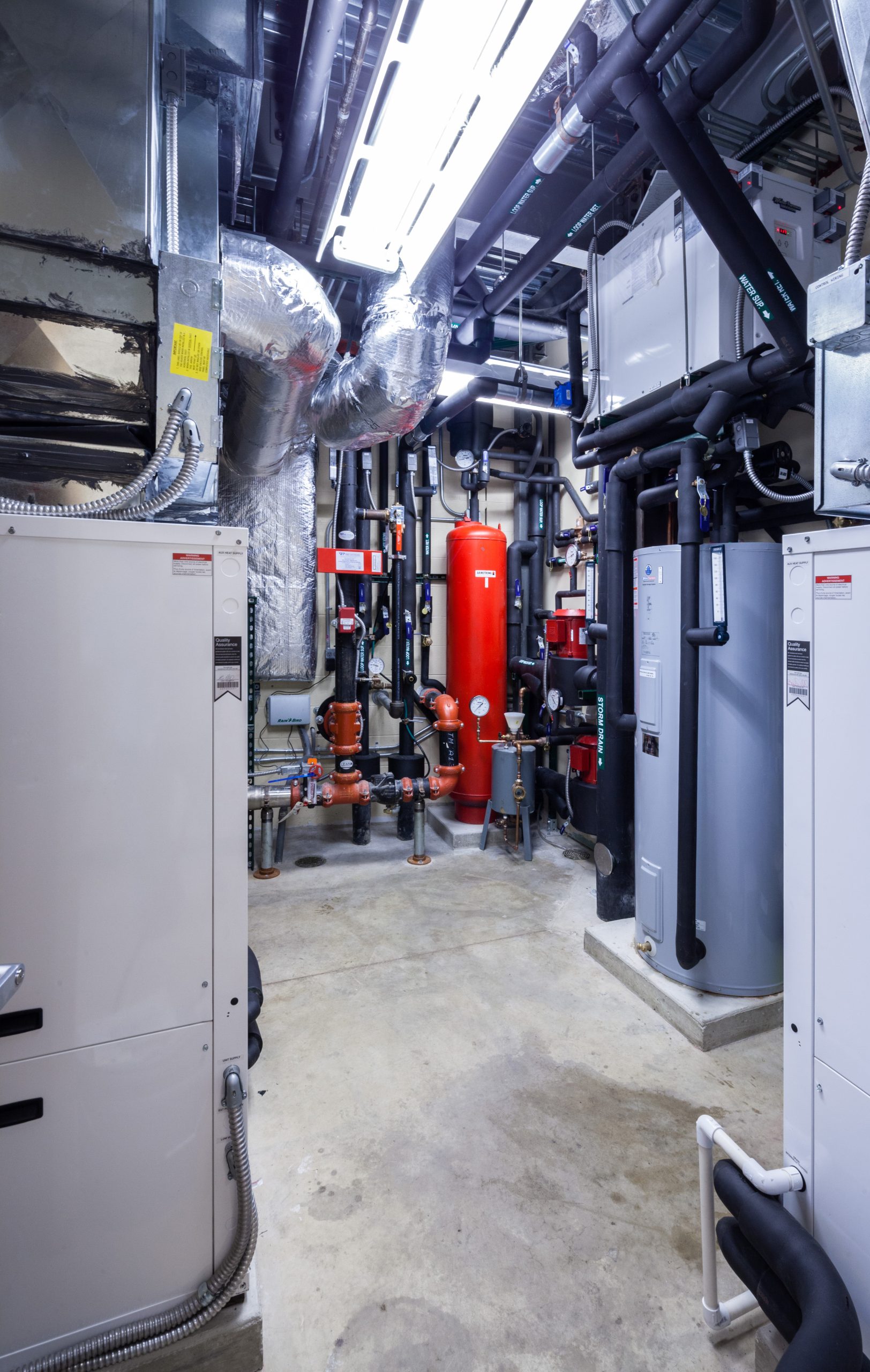
Working Clearances and Electrical Rooms: What NEC 110.26 Actually Requires
By Matthew Smith, PE
September 17, 2026Post Tagged in
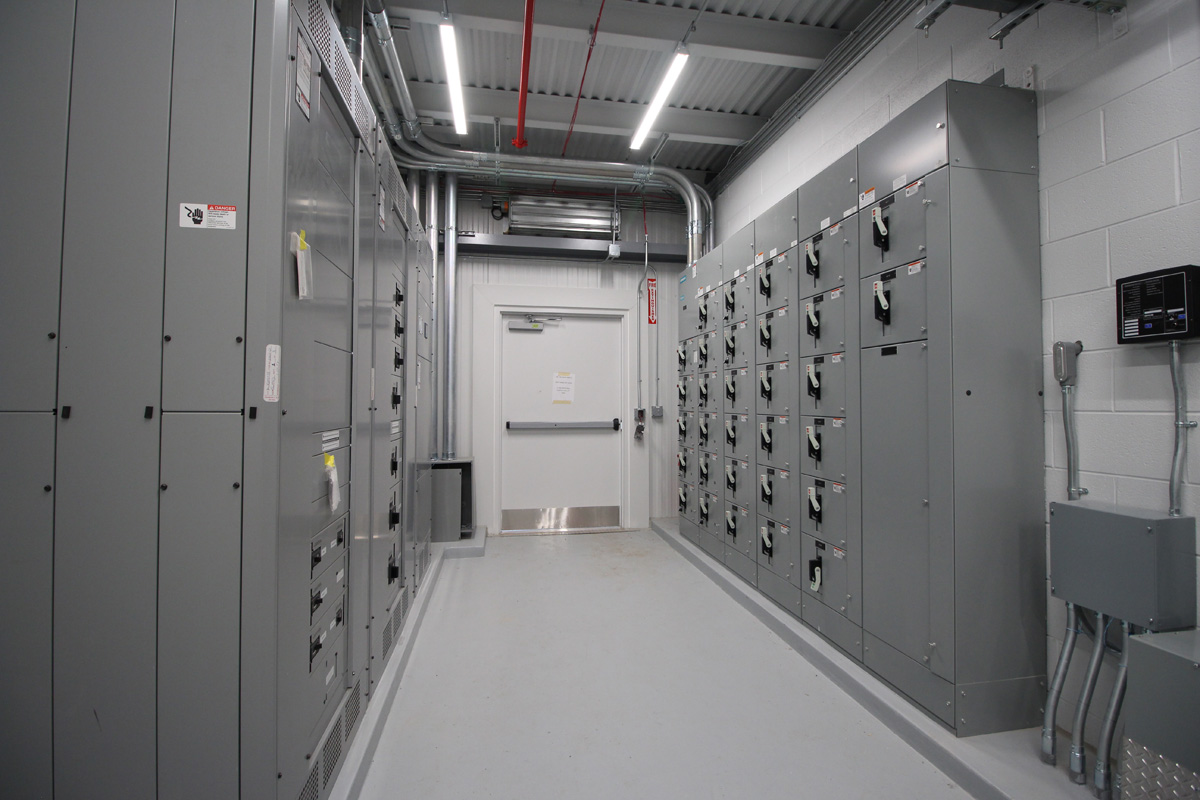
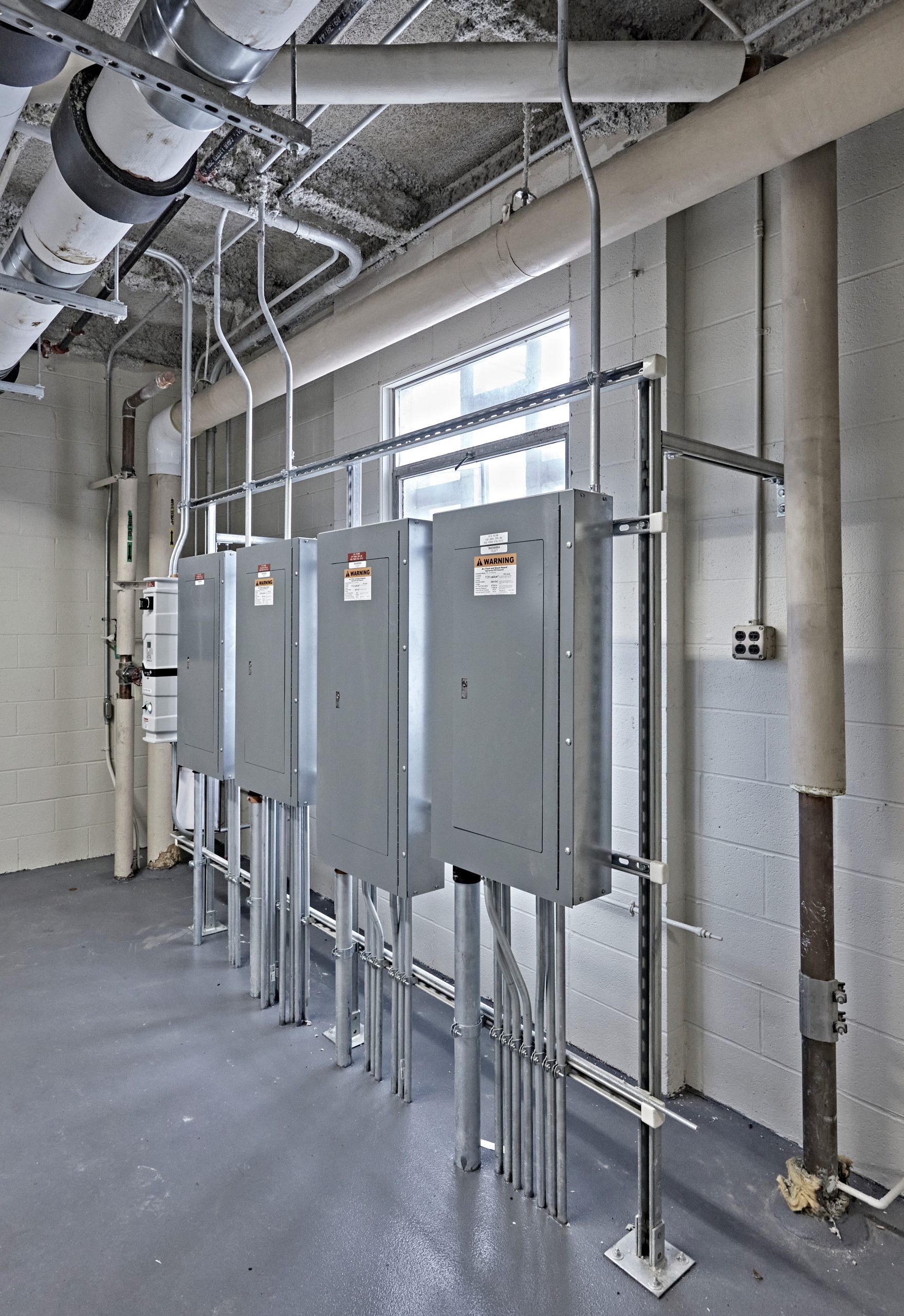
If you have ever wondered why the electrical engineers are always asking for more room, then in the field, the room is mainly empty space, you can thank National Electrical Code Section 110.26.It governs the space we leave around electrical equipment so it can be operated and maintained safely. Here’s a practical walkthrough of working clearances, the three conditions, and the electrical room rules that follow from them. |
|
 |
Working Space Starts with Voltage to GroundRequired depth of working space scales with the nominal voltage to ground. Notably, the 601–1000V to ground tier was added in the 2017 code cycle to coordinate with solar arrays — a direct acknowledgement that PV systems pushed common system voltages above the old thresholds.
Clearance depth also depends on what’s on the other side of the working space. That’s what the conditions describe: • Condition 1 — Insulated wall opposite the gear. Think gypsum board or wood: no grounded or live surface facing the equipment, so the smallest clearance applies. The mistake to avoid: judging condition by wall material alone. A gypsum wall with exposed conduit running down now has a grounded surface and has moved from Condition 1 to Condition 2. |