When higher education leaders talk about student success, the conversation often centers on academics, advising, or financial support.

But what if one of the most powerful tools for retention and engagement is something far more tangible? What if it is something students experience every day?

Frann’s Fieldhouse at Heidelberg University has become a living example of how mission-driven design can transform campus life. More than an athletic venue, the fieldhouse was envisioned as a place where students gather, move, connect, and feel like they belong.

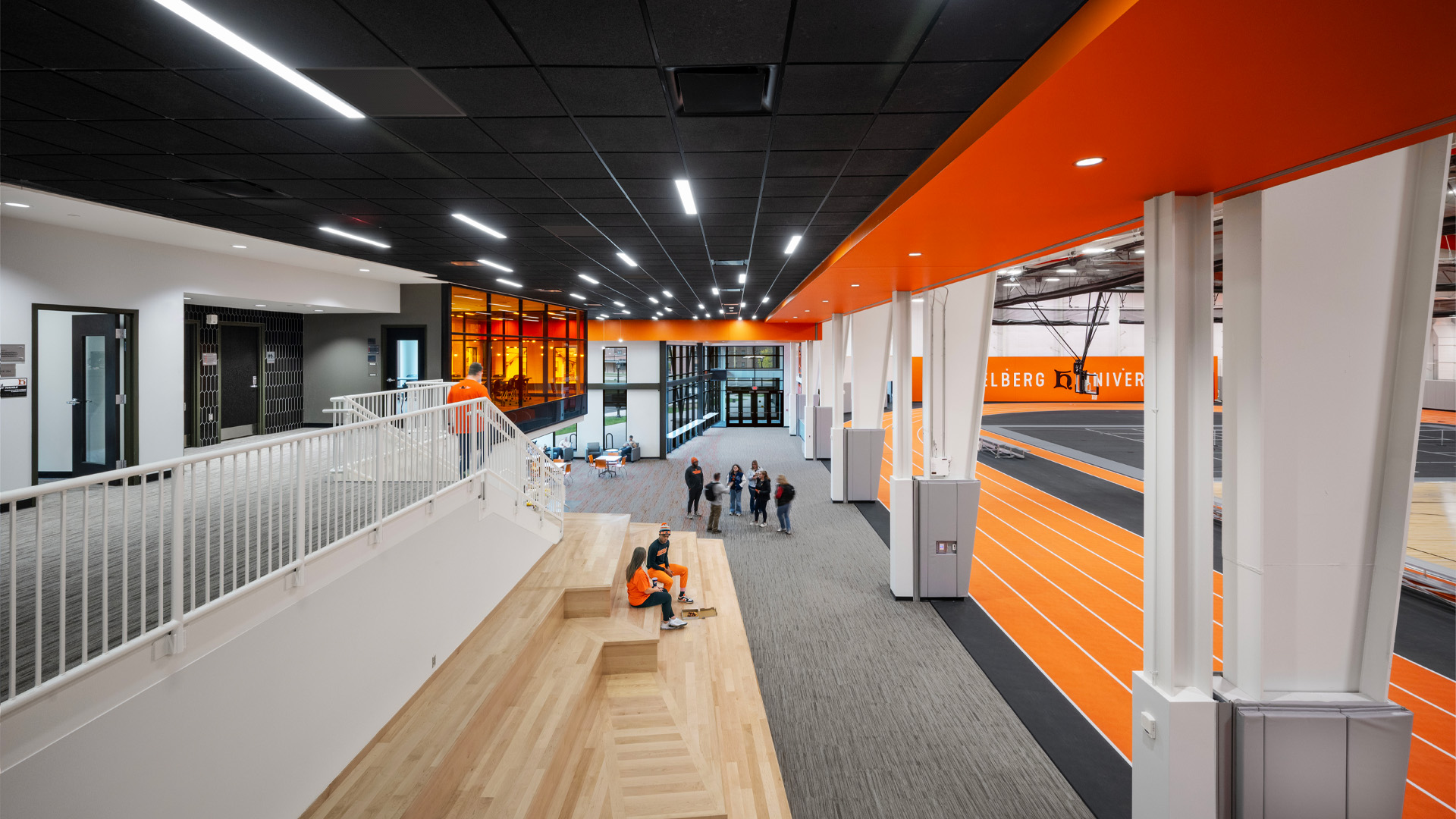
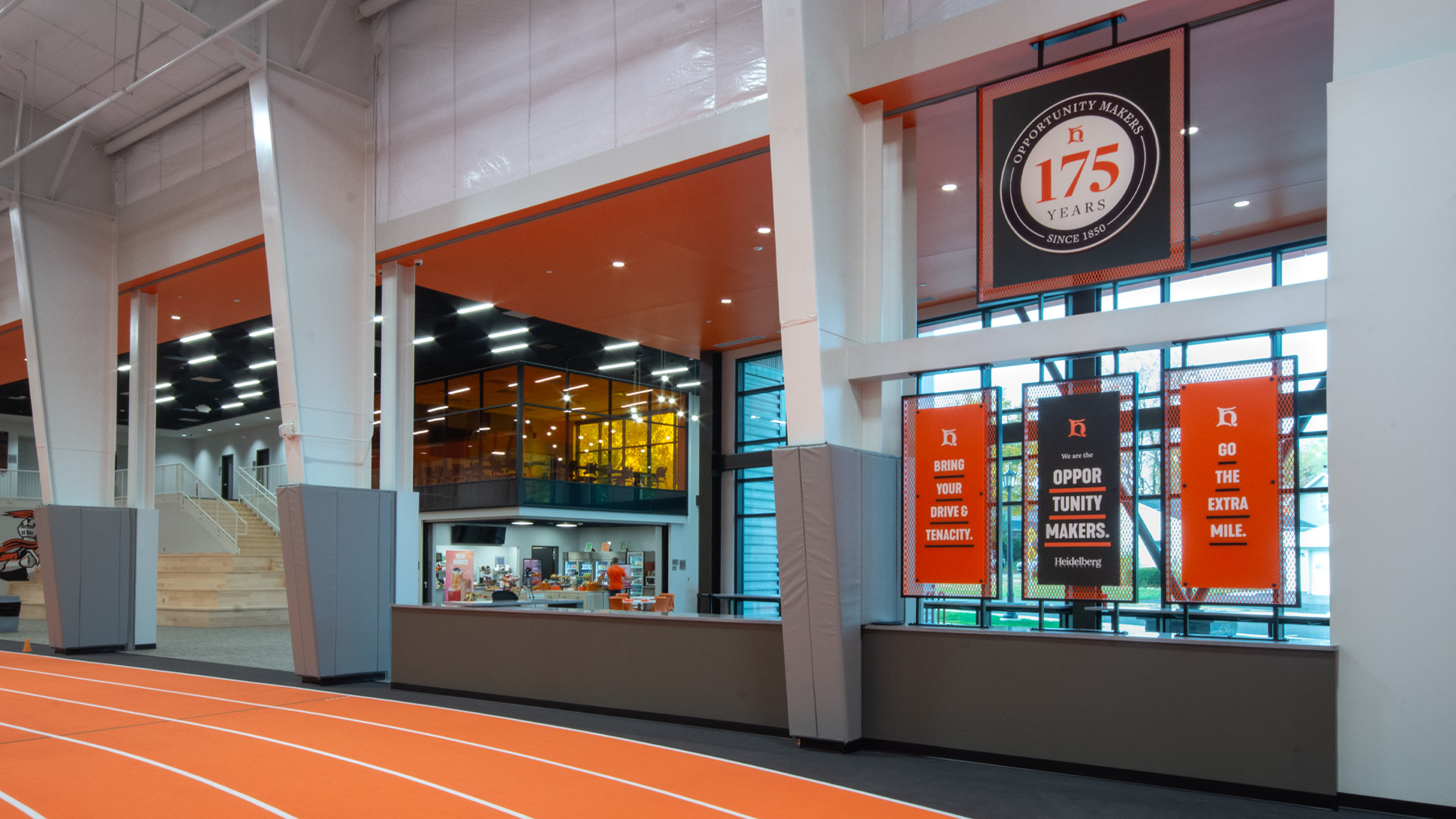
Students socialize in the orange branded lobby and student commons in Frann's Fieldhouse at Heidelberg University.

Belonging as a Strategic Priority

For more than 30 years, Heidelberg University explored the idea of building a fieldhouse. The need was clear: the institution was the only school in the Ohio Athletic Conference without one, and existing facilities were stretched thin.

Limited access to courts and fields resulted in early morning practices, late-night sessions, and restricted availability for intramural and recreational use. But beneath those operational challenges was a deeper issue: missed opportunities for connection.

When students have fewer opportunities to interact, decompress, and build relationships outside the classroom, the college experience is diminished. A lack of connection often translates to lower engagement and ultimately lower retention.

The project’s defining shift came when the question changed from “What kind of building do we need?” to “What kind of experience do our students need?”

Designing for Everyone, Not Just Athletes

The design process centered on a simple but powerful idea: a fieldhouse should serve more than its primary users. It should invite participation from across campus…and beyond.

From the beginning, the goal was not just to house athletics but to create a flexible, multi-use environment capable of supporting a wide range of activities simultaneously.

Key design strategies included:

  • Multi-functional spaces that can accommodate athletics, academics, and student life
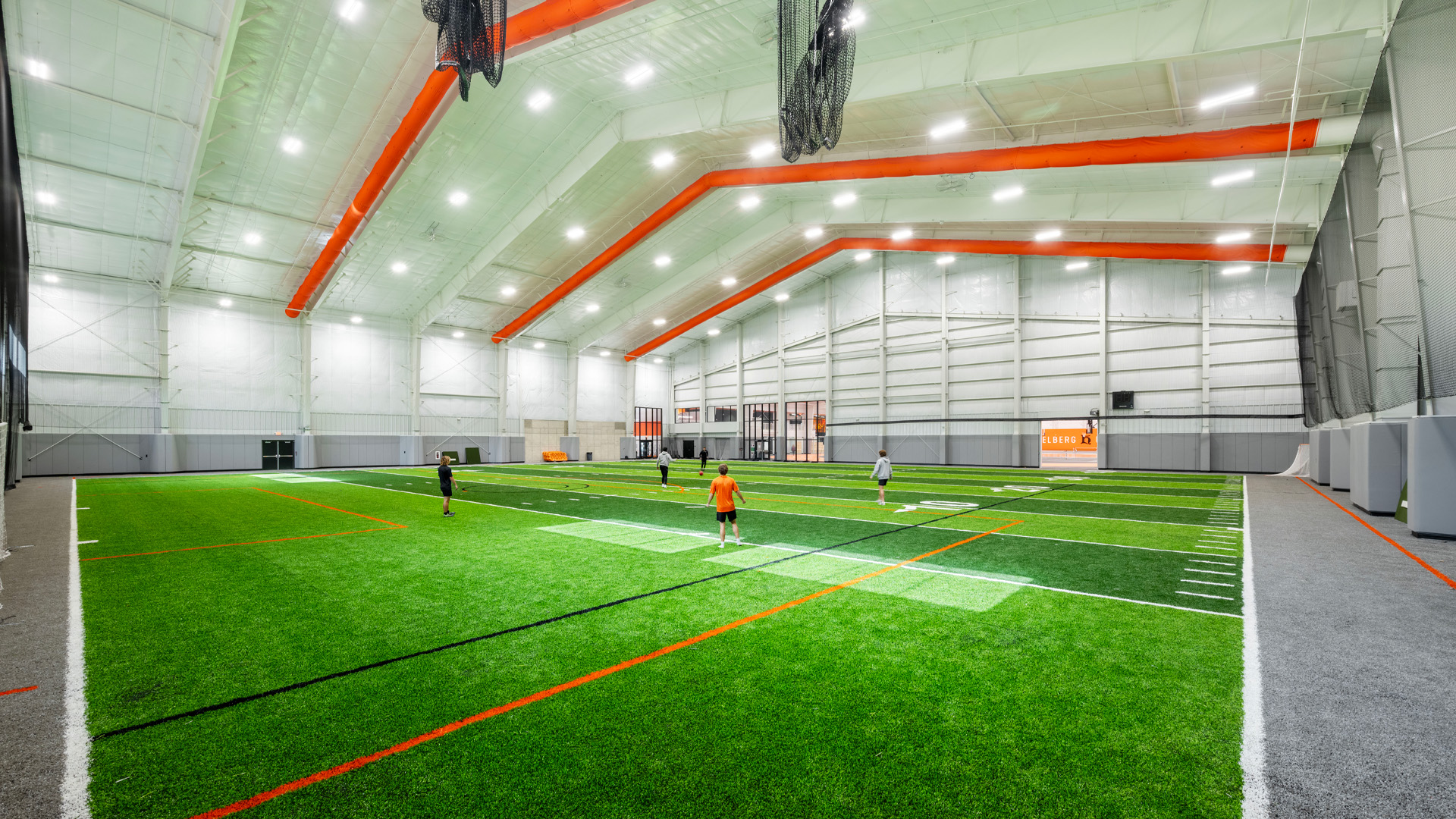
  • Simultaneous use capabilities, such as netting systems that allow multiple sports to operate at once
  • Integrated academic and support spaces, including classrooms and athletic training facilities
  • Intentional overlap between user groups to create shared experiences and connections

These strategies ensured that the building would not be siloed. Instead, it became a dynamic environment where student-athletes, non-athlete students, faculty, and community members all intersect. The design acknowledged “non-primary users”—those who might not typically see themselves reflected in a traditional athletic facility. That includes student organizations hosting events, marching band practices, and even informal gatherings like campus trivia nights.

This intentional inclusivity ensures that no one feels like an outsider walking through the doors.

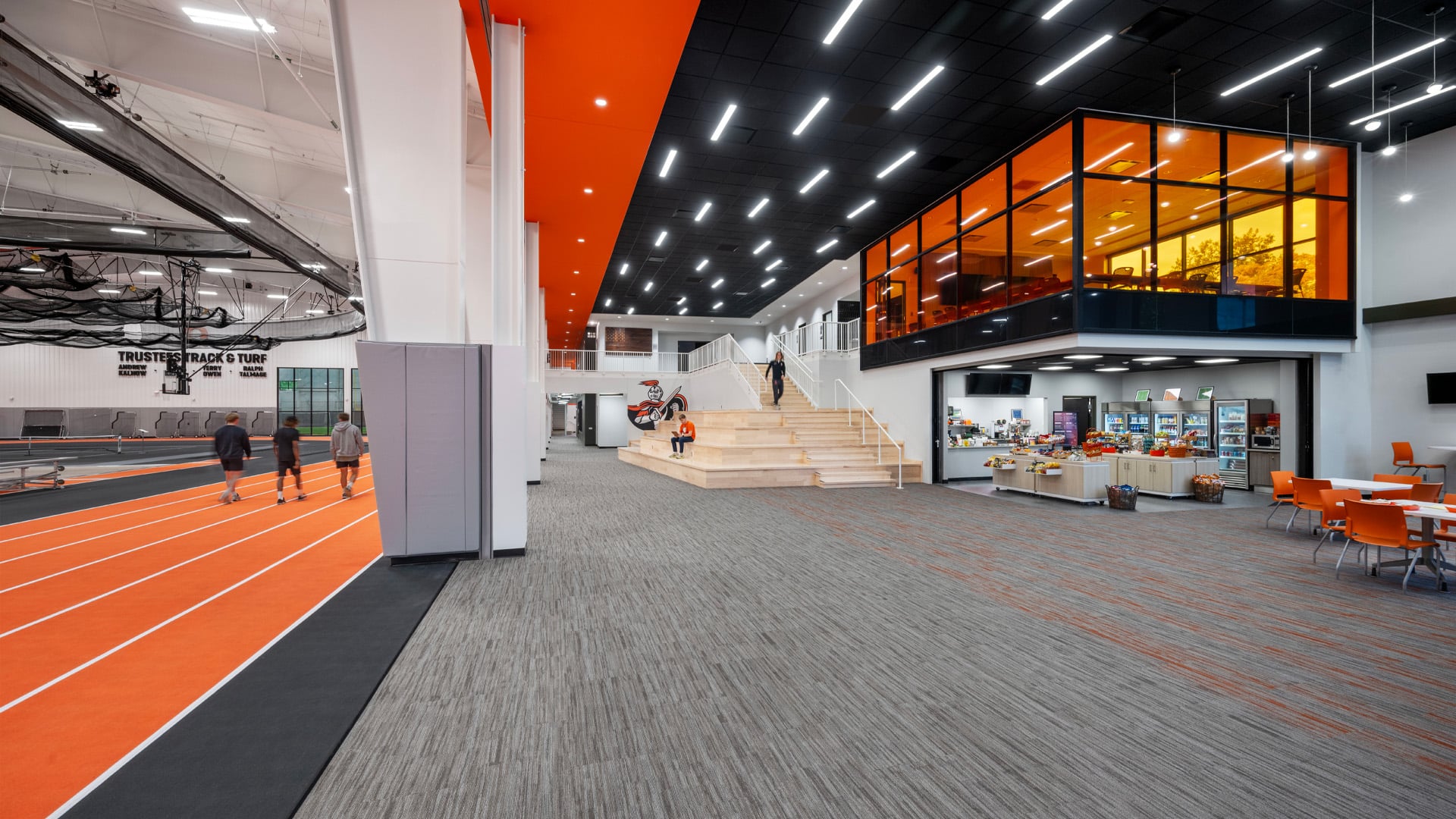
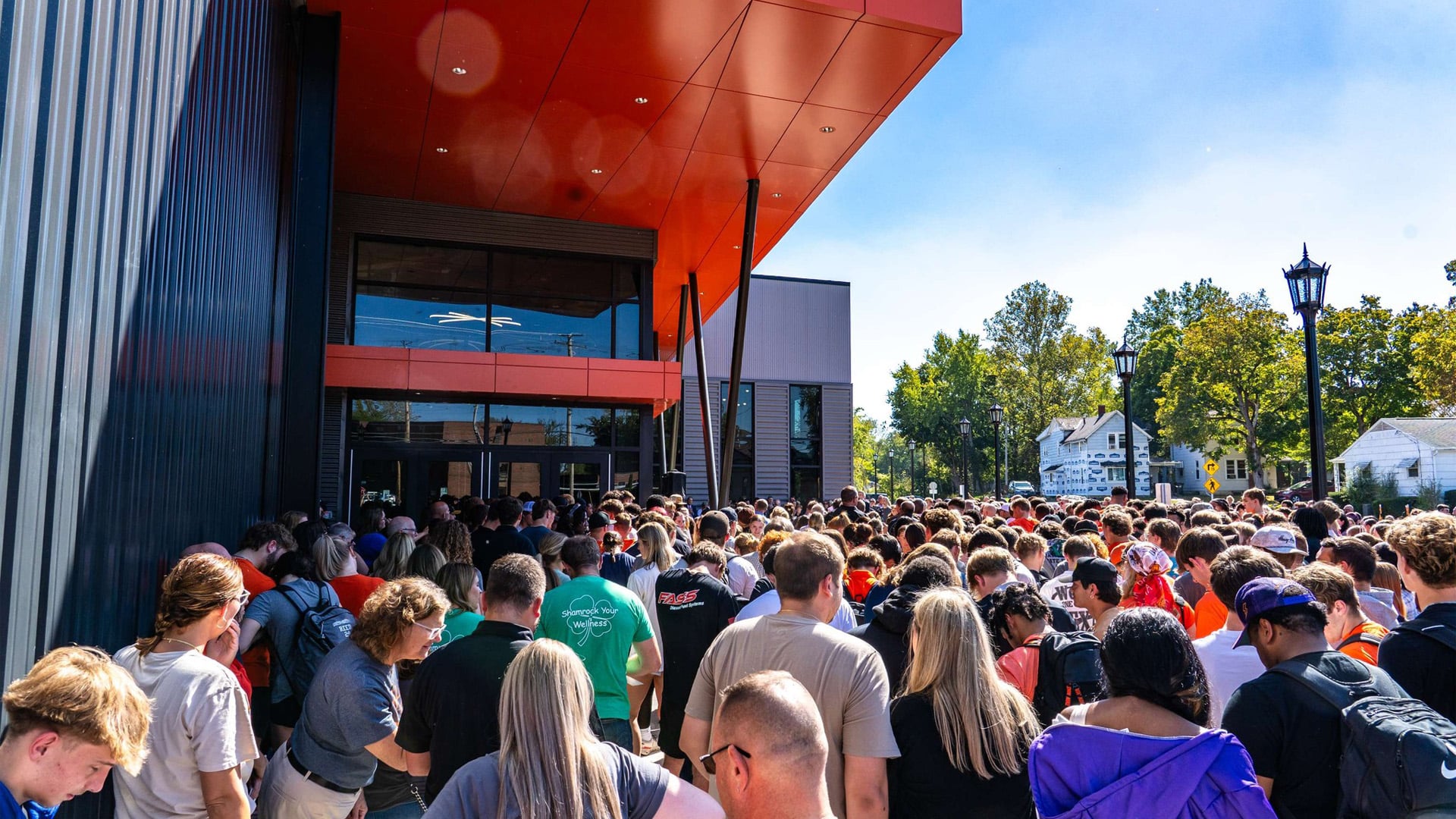
Vibrant lobby and student commons with orange glass outlook and wide stairs in Frann's Fieldhouse at Heidelberg University. Students walk in excited for the first time to Heidelberg University's Frann’s Fieldhouse at the dedication event for the building.

The Result: A Building That Works Every Day

Today, Frann’s Fieldhouse is not defined by a single function. It is a hub of activity from morning to night, weekday to weekend.

Intramurals, athletics, marching band, student organizations, informal events, and community groups all share the space.

This level of daily activation is not accidental. It reflects a deliberate strategy to treat the building as an active tool and not a passive asset.

As a result, Heidelberg has seen:

  • Expanded and diversified usage across a wide range of groups and campus organizations
  • New campus traditions, from Greek Week events to this spring’s commencement ceremonies
  • Enhanced recruitment opportunities, with prospective students experiencing a vibrant, active campus environment
  • Stronger community connections through events and shared access

Most importantly, the building supports a culture of belonging.

Extending Impact: A Hub for Campus and Community

One of the most transformative outcomes of Frann’s Fieldhouse is how it blurs the line between campus and community.

The facility has hosted a wide range of events that has brought thousands of visitors to Heidelberg—transforming it into both a campus asset and a regional destination.

Recent events include:

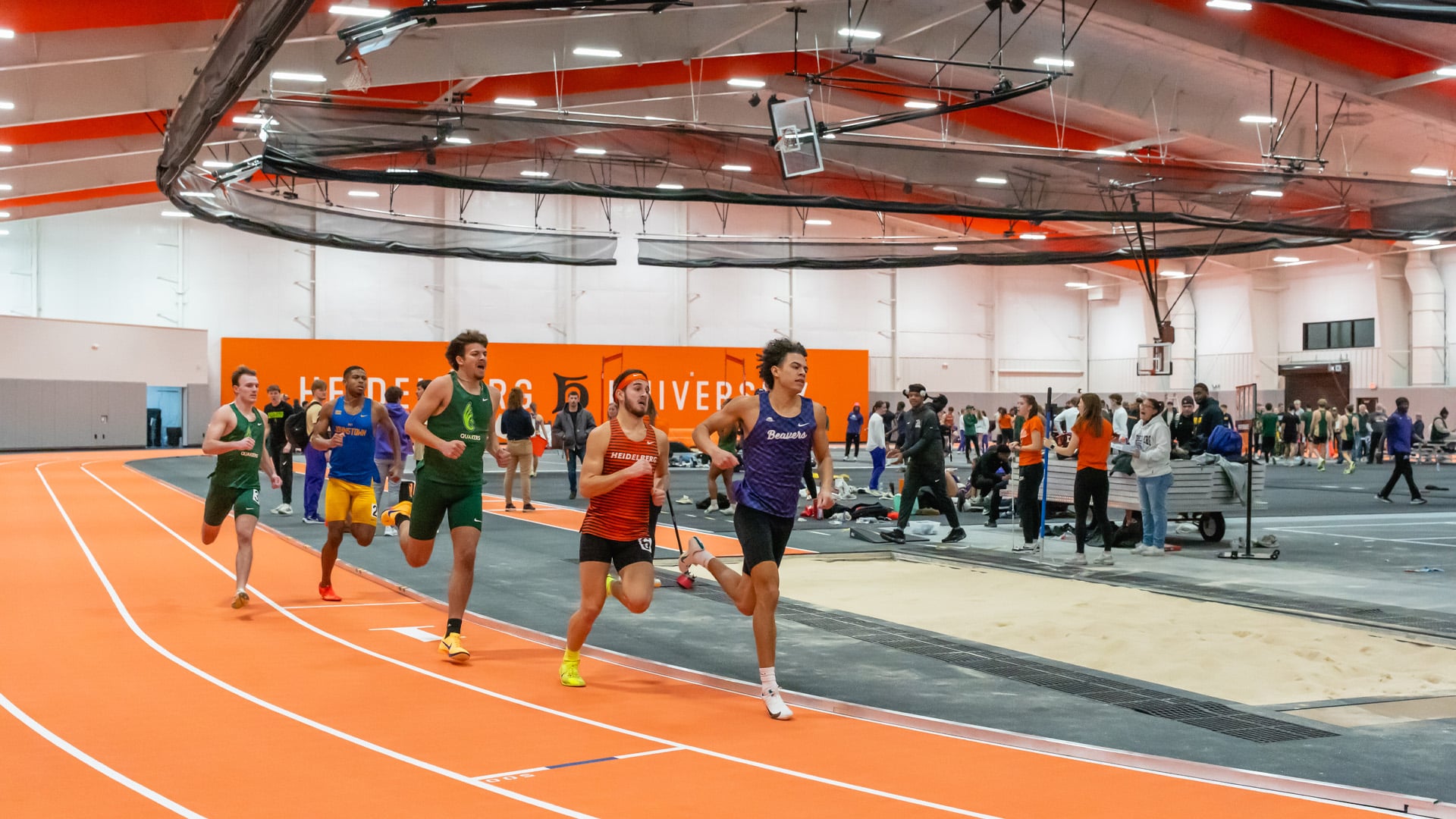
Collegiate and high school track meets that attract regional competitors and increase campus visibility

Wrestling invitationals drawing up to 2,000 attendees that position the campus as a destination for major events

Youth sports camps that bring new audiences to campus and expand early engagement with prospective students

Community events and alumni gatherings that strengthen relationships and deepen engagement beyond campus

Even on a typical weekday, the building is activated.

Community members regularly use the track for walking, and the on-site eatery—The Pulse—has become a local destination, drawing not only students but also high school visitors from the surrounding area.

This steady stream of activity creates more than economic impact. It builds familiarity, pride, and connection.

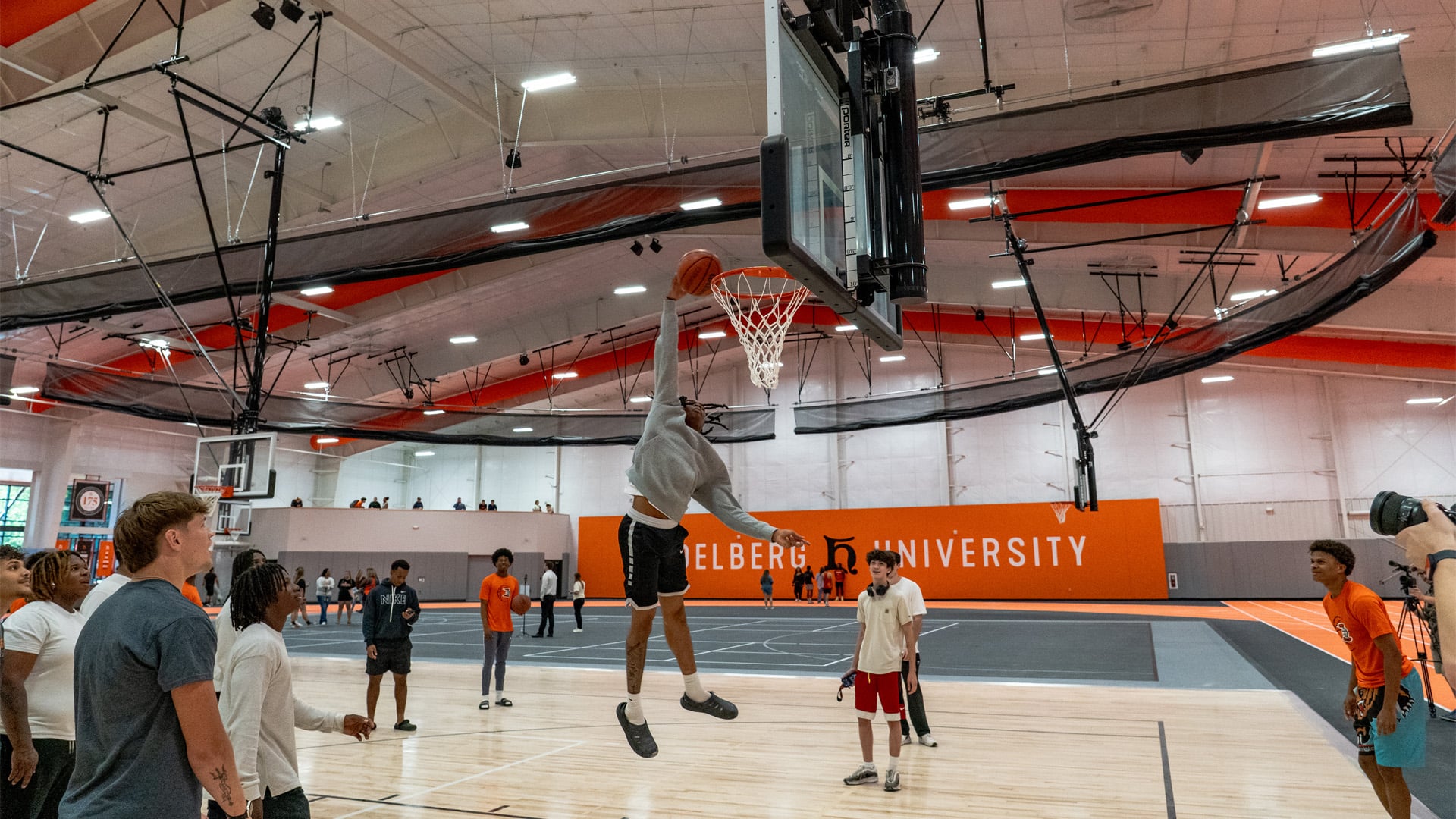
interior view of field with orange ceiling details in Frann's Fieldhouse at Heidelberg University. Large crowd of people wait in anticipation to see Heidelberg University's newly built Frann’s Fieldhouse.

A Building That Works Harder

Today, Frann’s Fieldhouse is defined by its constant motion. Athletics, intramurals, student life, academics, and community events all coexist within the same environment.

The outcomes align directly with the university’s strategic goals:

  • Higher engagement through accessible, everyday student experiences
  • New traditions that strengthen campus culture
  • Recruitment opportunities driven by visits, camps, and events
  • Retention support through connection, wellness, and belonging

Most importantly, the building functions as intended: it is embedded in the daily rhythm of campus life.

Designing for What Matters Most

Frann’s Fieldhouse demonstrates that the value of a facility is not measured in square footage or amenities, but in the experiences it enables and the connections it fosters.

When facilities are conceived as strategic tools that support wellness, engagement, and a sense of belonging, their impact is defined by how often—and by whom—they are used.

For institutions considering similar investments, the implication is clear: spaces that invite broad participation and everyday interaction can become lasting drivers of student engagement and campus culture.

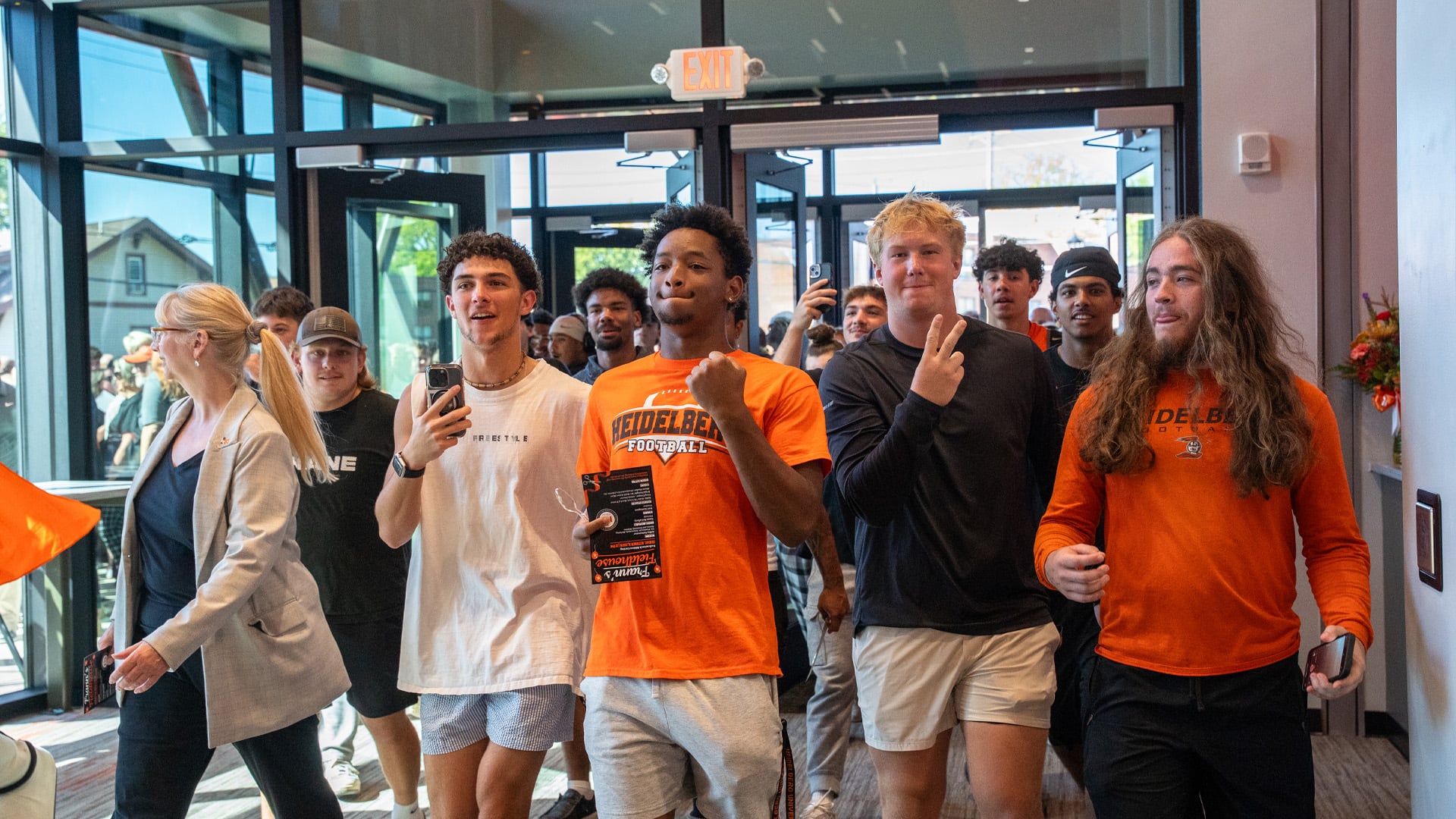
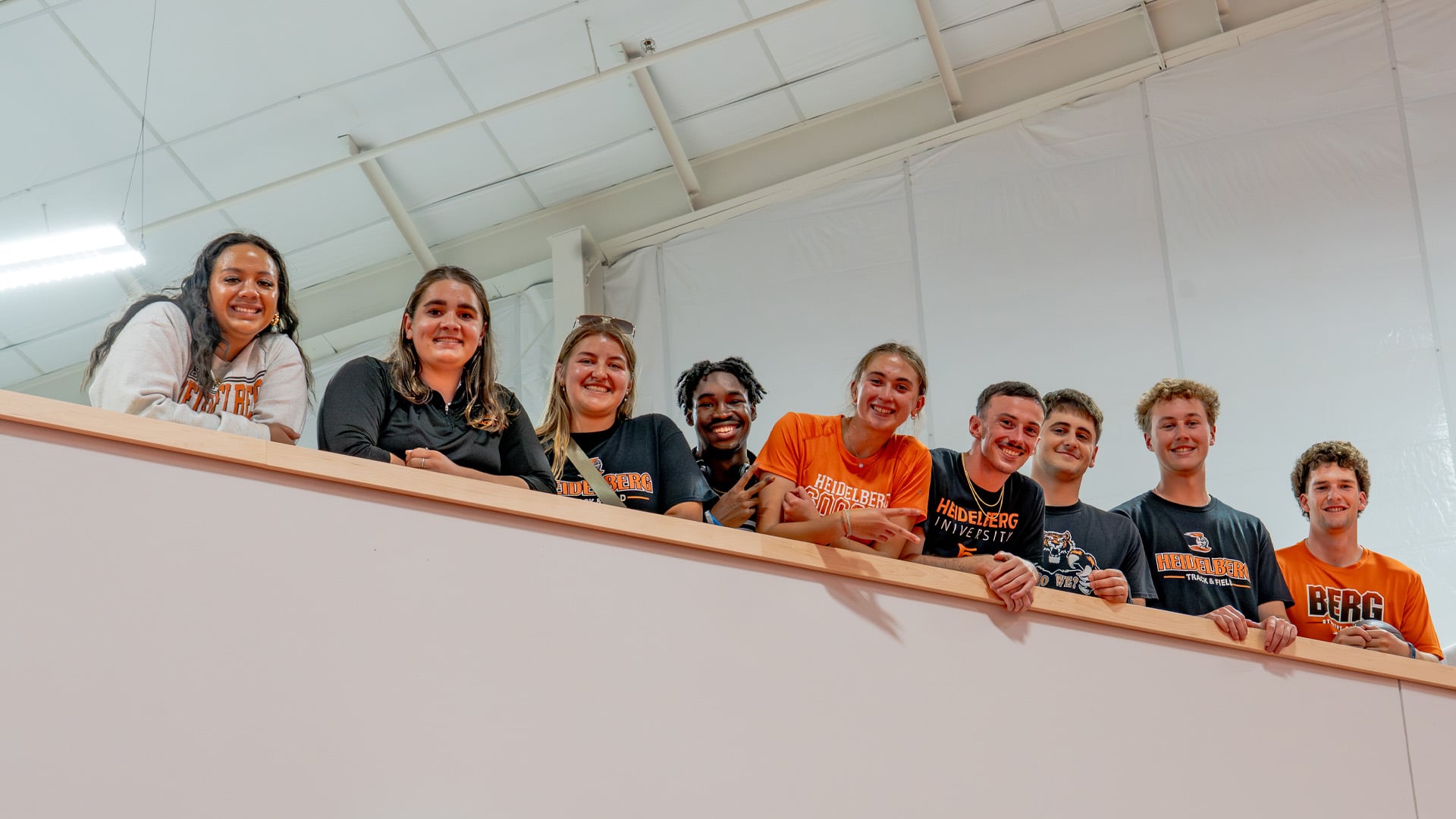
Students happily pose for a picture at the dedication event for Heidelberg University's Frann’s Fieldhouse.

Every campus has opportunities to create stronger connections through thoughtful, mission-driven design. If you’re exploring ways to better support student engagement, strengthen campus culture, or make the most of your existing facilities, we can help. Contact us to start the conversation.

Copyright ©2026 Design Collaborative