Digital Isn’t Enough: Why Your Branch Still Drives Growth
By Jared Monce, AIA
March 2, 2026Post Tagged in
For years, the industry narrative has suggested that digital banking would make the branch obsolete.Mobile adoption has surged. Account opening is frictionless. AI handles routine transactions. On the surface, it seems plausible that a financial institution could grow membership without ever investing in a physical presence. But the data and the lived experience of financial institutions tell a more complex story. Research from Deloitte shows that while digital channels drive convenience, branch satisfaction has a disproportionate impact on overall customer satisfaction. Insights widely cited from McKinsey & Company and Fiserv indicate that in-branch account openings consistently convert at higher rates than digital-only channels. And reporting from PYMNTS continues to show that members prefer in-person engagement for complex financial decisions. Even digitally sophisticated institutions recognize this. Bank of America continues opening new branches, not as transaction centers, but as advisory and relationship hubs. This isn’t nostalgia. It’s strategy. |


|
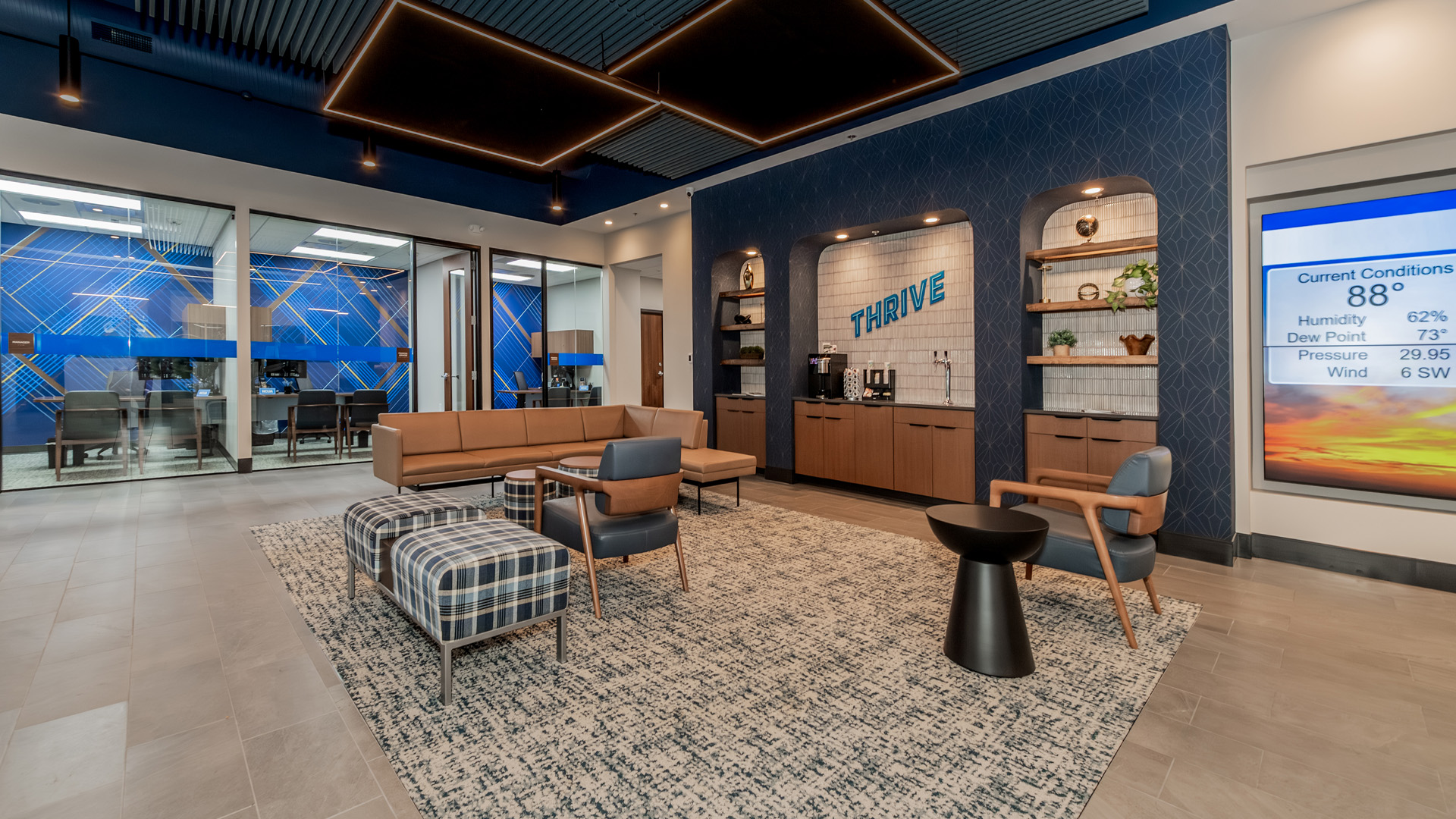 |
Digital Builds Access. Physical Builds Relationships.Digital channels excel at speed, convenience, and scale. They reduce friction and support daily transactions efficiently. But financial relationships are not built on routine transactions alone. They are built during moments of complexity: mortgages, small business lending, wealth planning, debt restructuring, life transitions. These are consultative conversations. They require privacy, clarity, and human reassurance. And those moments require space. A well-designed branch is not simply a place to conduct transactions. It is a physical expression of brand credibility and institutional stability. It communicates permanence in a way that a mobile interface cannot. For credit unions and community banks especially, physical presence signals commitment to a market. It reinforces the message: We are invested here. More importantly, design directly influences advisory performance. Acoustics determine whether members feel safe discussing finances. Sightlines affect approachability and engagement. Spatial zoning can either encourage consultative conversations or push staff back into transactional behavior. When advisory offices feel improvised or exposed, conversations stay shallow. When they are intentionally designed for comfort, privacy, and collaboration, relationship depth increases. Technology Should Elevate, Not Replace, the ExperienceIntegrated technologies further elevate the experience. Banker tablets allow staff to access account information and present product options seamlessly, without pulling members to a traditional teller line. Interactive digital displays provide visually engaging information on services, educational content, or promotions, while maintaining the consultative flow of conversation. These tools, combined with thoughtful layout and intuitive wayfinding, create a branch where digital and physical strategies reinforce each other rather than compete. |