How to Set a Healthcare Renovation Up for Success
By Bill Ledger, AIA, ACHA, NCARB, EDAC, LEED AP, LSSGB Jessica Detweiler, AIA, ACHA, NCARB
February 26, 2026Post Tagged in
Healthcare renovations are complex by nature.They involve aging infrastructure, active patient care environments and regulatory oversight—all at the same time. Projects that perform well rarely do so because construction is easy. They perform well because the groundwork was thorough. Success in renovation is largely determined before construction documents are complete. Seven principles consistently separate stable projects from reactive ones. |
|
 |
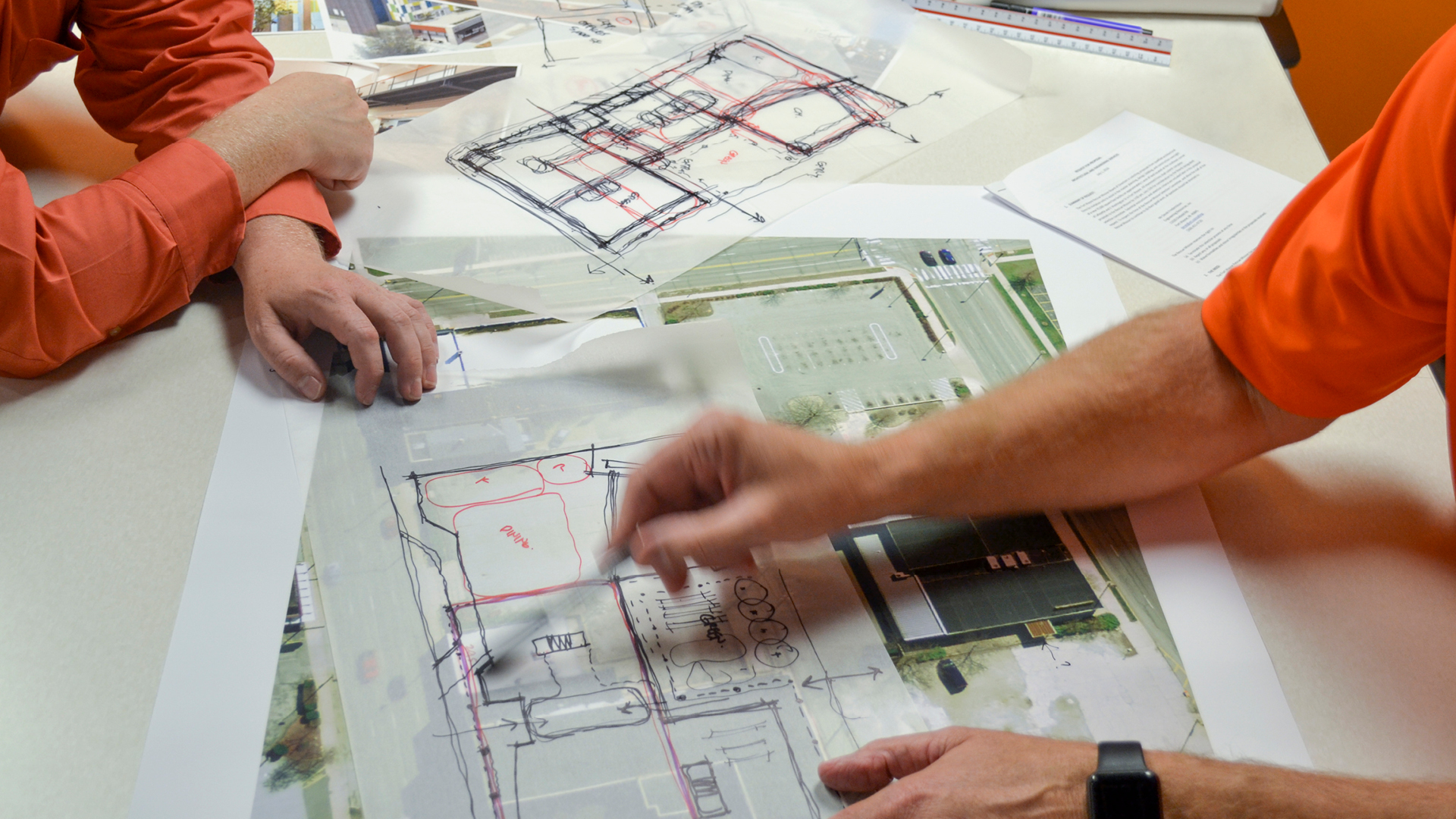
1. Define the Real Problem Before Defining the SolutionRenovations often begin with a stated need: more space, better flow, updated finishes. But the stated need and the actual operational issue are not always the same. Careful workflow analysis—tracking patient movement, staff circulation, equipment staging, and material flow—often reveals whether the constraint is square footage or process. In some cases, expansion is necessary. In others, targeted reconfiguration or operational adjustments provide greater impact. Establishing this clarity early prevents oversizing a solution—or underbuilding one. 2. Align Leadership and User Groups Early in the ProcessLeadership establishes strategic goals, financial boundaries, and institutional priorities. User groups understand daily operations and workflow friction. Both perspectives are necessary. When user input is delayed until later design phases, revisions often occur, sometimes increasing cost and almost always extending schedules. A more stable process allows leadership to define parameters first, followed by structured engagement with user groups early enough to validate assumptions before design progresses too far. |